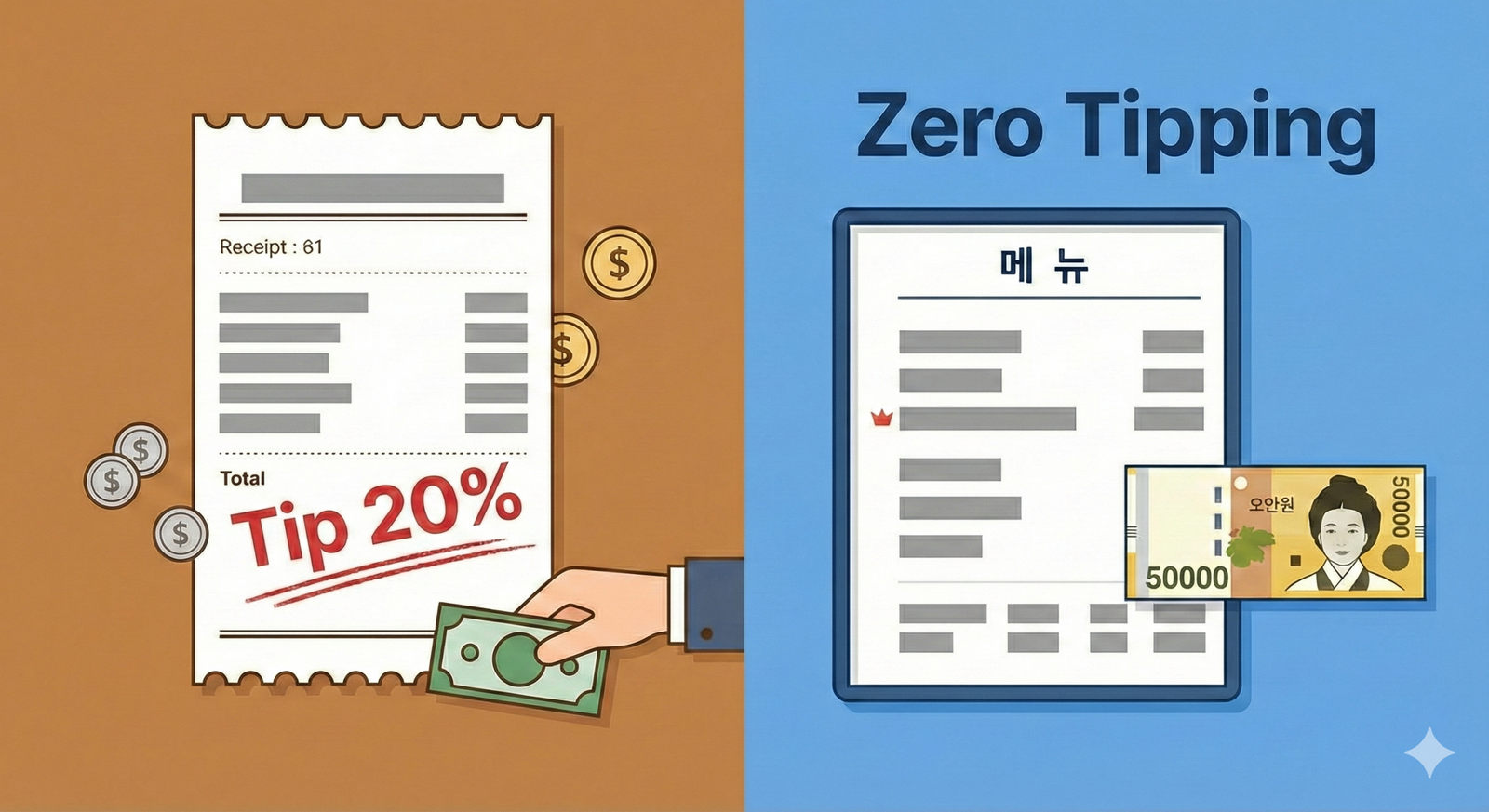
Tipping in South Korea: 2026 Etiquette Guide for Travelers
Tipping in South Korea: A Comprehensive Etiquette Guide for International Visitors
When traveling to a new country, one of the most stressful “hidden” aspects of the budget is often the tipping culture. For travelers from North America or parts of Europe, where a 15–25% gratuity is the expected norm, arriving in South Korea can feel like a breath of fresh air—or a source of immense confusion.
In South Korea, the tipping culture is essentially non-existent. While this sounds straightforward, the nuance lies in understanding why it isn’t practiced and identifying the very rare exceptions where a gesture of gratitude might be appropriate. This guide provides a deep dive into the local standards of Korean service and how to navigate social interactions without the pressure of the “tip jar.”
The Landscape & Challenges: Why Tipping Feels Foreign in Korea
For many international visitors, the impulse to leave a tip is driven by a desire to show appreciation for excellent service or a fear of appearing rude. However, in the Korean context, the service industry operates under a fundamentally different philosophy.
The primary challenge for visitors is the “guilt of the zero.” You may receive world-class service—your side dishes refilled five times without asking, or your heavy luggage carried up three flights of stairs—and feel an intense social obligation to reach for your wallet. In Korea, however, excellent service is viewed as a standard component of the price you see on the menu.
The Philosophy of “Jeong-chal-je” (Fixed Pricing)
South Korea has a deeply ingrained system of Fixed Pricing (Jeong-chal-je). Whether it is a luxury department store, a local hair salon, or a corner BBQ joint, the price listed is the price paid. This transparency is a point of national pride. Attempting to pay more than the listed price can sometimes be misinterpreted as a misunderstanding of the bill or, in rare cases, an unintentional display of superiority that can make the recipient feel uncomfortable.
The Core Guide: The Local Standard for 2026
If you are looking for the “Golden Rule” of Korean tipping, it is this: Do not tip.
1. Restaurants and Cafes
In 99.9% of dining establishments, tipping is not expected, nor is there a space for it on credit card receipts. The staff are paid a living wage, and “service” (often referred to locally as ‘Service’ or ‘Seo-bi-seu’ in Konglish) is considered part of the hospitality experience.
2. Taxis and Transportation
Taxi drivers do not expect tips. If your fare is ₩9,800 and you give the driver ₩10,000, they will almost always try to give you the ₩200 change. While it was once common to let drivers “keep the change” for very small amounts, the shift toward credit cards and apps like K-RIDE has made this practice nearly obsolete.
3. Hotels and Porters
Even in international hotel chains in Seoul, tipping is not the standard. Service charges are typically already included in your room rate or restaurant bill (usually 10% VAT and 10% service charge). You are not expected to tip the bellhop or the concierge.
Comparative Insights: Western Tipping vs. Korean Service
To help you visualize the difference, consider the following comparison between the Western gratuity system and the Korean fixed-price system.
| Category | Western Standard (e.g., USA) | South Korean Standard |
|---|---|---|
| Dining Expectation | 15% – 25% of the total bill. | 0% (Included in the price). |
| Service Quality | Often tied to the incentive of a tip. | High standard regardless of tips. |
| Price Transparency | Tax and tip are added at the end. | Tax (VAT) is included in the menu price. |
| Payment Process | Tip line included on credit card slips. | No tip line; pay exactly what is billed. |
| Social Perception | Not tipping is seen as an insult. | Tipping can cause confusion or awkwardness. |
Exceptional Situations: When Tipping Might Occur
While tipping is not a custom, there are highly specific “niche” scenarios where a monetary gesture might occur among locals. These are not requirements for tourists, but understanding them offers a window into Korean social hierarchy.
1. High-End Traditional Dining (Hanjeongsik)
In very expensive, traditional Korean restaurants where a dedicated server stays with your group in a private room for the entire evening, a small tip might be offered. This usually happens during high-stakes business meetings or formal family gatherings like a Sang-gyeon-rye (the formal meeting between two families before a wedding).
- The Logic: It is a gesture to request extra care and attentiveness for a sensitive or important event.
- The Tourist Context: Even in these venues, if you are a foreign traveler, you are absolutely not expected to do this.
2. The “Pocket Money” Gesture
Occasionally, an older person might give a small amount of money to a younger service worker as a form of “Yong-don” (pocket money/allowance). This is less about “tipping for service” and more about a cultural dynamic where elders show “Jeong” (affection/connection) to the younger generation.
3. Personalized Tours
If you hire a private driver or a specialized guide for a multi-day trip, a small gift or a modest tip at the end of the journey is sometimes practiced as a heartfelt “Thank You,” though it remains optional.
Troubleshooting & Common Pitfalls
What if I leave money on the table?
If you leave a tip on the table at a restaurant, the most likely outcome is that the server will come running after you, thinking you accidentally forgot your change. This can lead to an awkward exchange where they try to return the money while you try to explain it’s a gift. To avoid this “chase,” it is best to simply keep the money.
Dealing with “Aggressive” Service
In very rare, tourist-heavy areas (like certain older markets), a vendor might jokingly ask for a tip or “extra.” This is almost always a joke or a lighthearted attempt to engage with tourists. You can simply smile and say “Gamsahamnida” (Thank you) and move on.
The “Service” (Freebies) Culture
In Korea, “Service” refers to free items given by the house—such as an extra dish of fried dumplings or a bottle of soda. This is a sign of hospitality. The correct response is a verbal “Thank you,” not a monetary tip. Giving money in exchange for a “service” item can actually undermine the spirit of the gift.
FAQ & Pro-Tips for 2026 Travelers
Q: Is VAT included in the prices I see?
A: Yes. By law, the price displayed on menus and price tags must include the 10% Value Added Tax (VAT). What you see is exactly what you pay.
Q: Should I tip delivery drivers?
A: No. When using apps like Baemin or Coupang Eats, the delivery fee is already calculated and paid through the app. There is no expectation to give cash at the door.
Q: How do I show appreciation if I can’t tip?
A: The best way to show appreciation in Korea is through:
- Politeness: A slight bow and a sincere “Gamsahamnida” goes a long way.
- Online Reviews: Leaving a positive review on Google Maps, Naver Map, or TripAdvisor is the most helpful thing you can do for a local business.
- Return Patronage: Simply coming back again is the highest form of compliment.
Pro-Tip: If you genuinely feel the need to give something extra to someone who went above and beyond (like a guesthouse host), a small physical gift—such as a box of nice cookies or a small souvenir from your home country—is often more culturally appropriate and better received than cash.
Final Summary
South Korea is one of the few places in the world where you can enjoy world-class hospitality without the mental math of gratuity. Embrace the local standard: pay the bill, give a polite bow, and enjoy the “Jeong” that comes from a culture that prides itself on service for the sake of hospitality, not for the sake of a tip.