Inwangsan Mountain Hiking Guide: The Best Seoul City Wall View
Inwangsan Mountain Hiking Guide: The Best Seoul City Wall Trail for Travelers
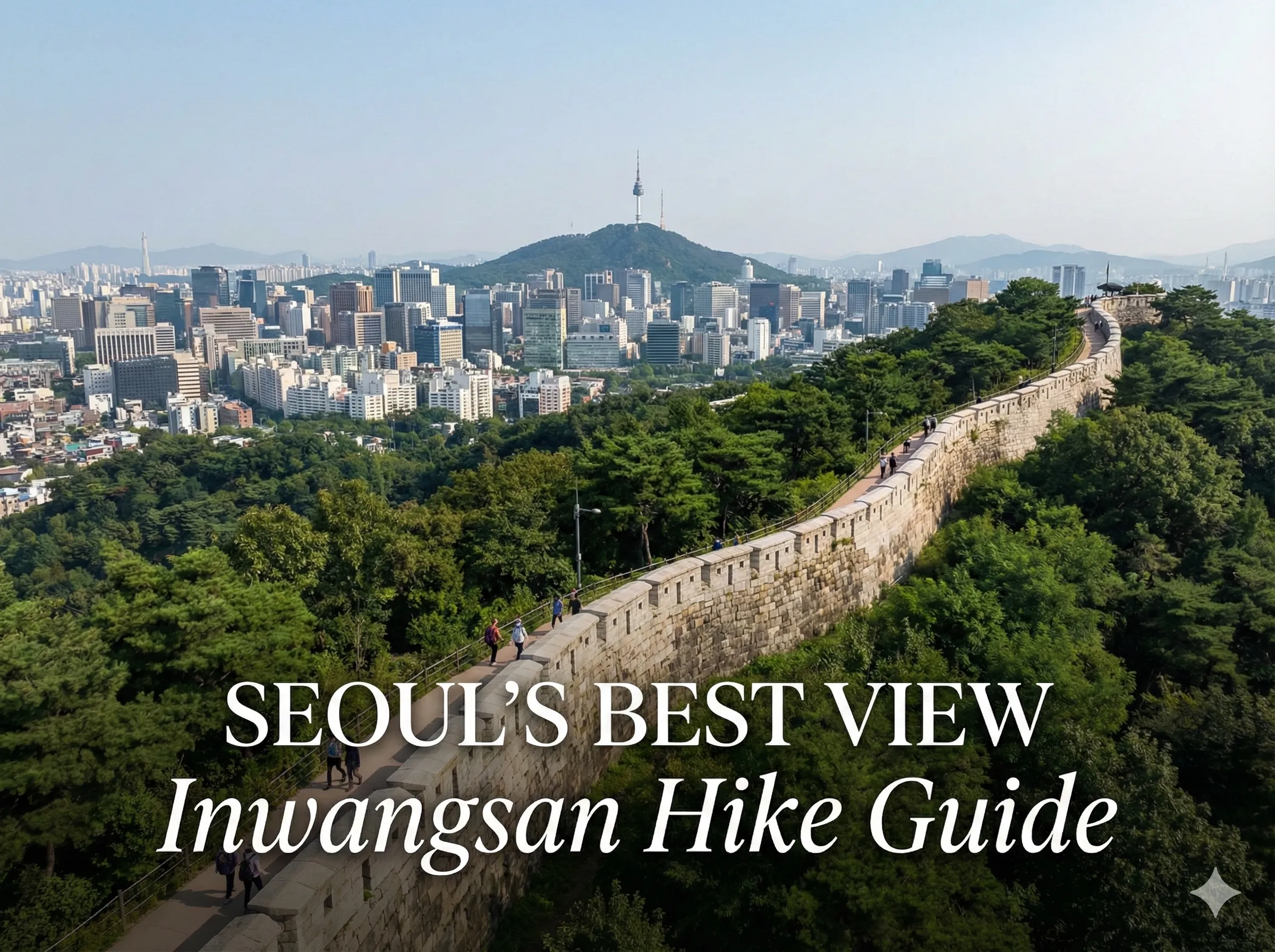
Hiking in Seoul is a unique experience where 600 years of history meet a pulsating modern skyline. While the city is surrounded by granite peaks, Inwangsan Mountain (338m) stands out as the premier choice for Global Visitors. It offers the most “Seoul-like” scenery—winding stone fortress walls, views of the Royal Palace, and a panoramic vista of the N Seoul Tower—all accessible within a two-hour round trip.
For those accustomed to wild, unpaved trails in Western national parks, Inwangsan offers a different “Local Standard.” It is a meticulously maintained urban trail that bridges the gap between a casual stroll and a serious hike.
The Landscape & Challenges: Why Inwangsan is Unique
For a first-time visitor, hiking in Korea can feel intimidating due to the language barrier and the density of the trail networks. Many travelers often mistake the “Inwangsan Jarak-gil” (a flat perimeter forest path) with the “Inwangsan Ridge Trail” (the fortress wall hike to the peak).
The primary challenge for foreigners is navigation. Unlike trails in the US or Europe that rely on colored blazes on trees, Korean urban trails are defined by landmarks and stairs. Inwangsan is also a historically sensitive area due to its proximity to the Blue House (the presidential residence), meaning certain paths were closed to the public for decades. Since 1993, the mountain has been accessible to hikers, and today it remains one of the safest and most accessible urban hiking spots in Seoul, even after sunset.
Practical Step-by-Step Navigation: The “Golden Tiger” Route
To ensure you don’t get lost, follow this precise navigation guide starting from the heart of Seoul.
Phase 1: The Approach (Subway to Trailhead)
- Starting Point: Arrive at Gyeongbokgung Station (Line 3), Exit 1.
- The Walk: Walk straight for about 10 minutes. You will pass several convenience stores (CU, 7-Eleven). This is your last chance to buy water.
- The Landmark: Look for the Sajik-dan (an altar complex) on your right. Continue uphill following the signs for “Inwangsan Mountain.”
- The Entrance: The true ascent begins when you see the Golden Tiger Statue. This statue marks the entrance to the fortress trail. To the left of the tiger, you will find wooden stairs leading upward. This is the start of the Seoul City Wall trail.
Phase 2: The Ascent (Wall to Peak)
Once you hit the stairs, the path is “impossible to get lost” because you simply follow the stone wall.
- Beom-bawi (Tiger Rock): About 20 minutes in, you will reach a massive flat rock area. Many hikers mistake this for the summit because the view of the N Seoul Tower and the city center is breathtaking. Take your photos here, but keep going.
- The Steep Section: Just before the summit, there is a short, steep section with metal railings. The granite can be slippery if wet, so hold onto the rails.
- The Summit: At 338 meters, the peak offers a 360-degree view. Look East to see Gyeongbokgung Palace and the Blue House (Cheong Wa Dae). On a clear day, the Lotte World Tower (one of the world’s tallest buildings) is visible to the South-East.
Special Recommendation: The Night Hike
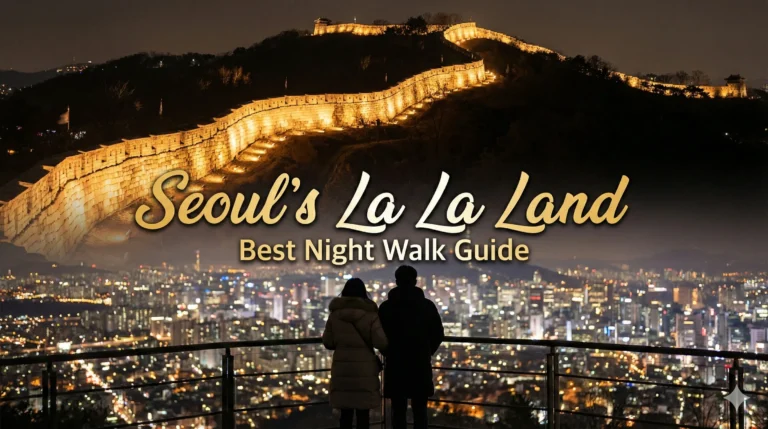
Inwangsan is famous for its night views. The entire fortress wall is lined with warm LED lights, making it incredibly romantic and safe for solo hikers. The contrast between the ancient yellow-lit stones and the neon-blue city lights below is the ultimate Seoul photo-op. The lights stay on until late at night, and the trail is frequented by locals, ensuring a safe environment.
Troubleshooting & Common Pitfalls
- The “Jarak-gil” Trap: If you find yourself on a flat wooden deck that circles the mountain without going up, you are on the Jarak-gil. Look for any staircase pointing “Up” toward the “Seoul City Wall.”
- Closed Days: As of January 2026, the main hiking trails are open daily, though some facilities (museums, rest areas) close on Mondays. Note that access policies may change due to security considerations related to the nearby presidential residence. Check current conditions before your visit, especially if hiking on a Monday.
- Footwear: While sneakers are fine, avoid shoes with smooth soles (like leather dress shoes). The granite sections near the top require a bit of grip.
After the Hike: Exploring Seochon & Tongin Market
The hike ends back where you started, leading you directly into Seochon Village, one of Seoul’s oldest and trendiest neighborhoods.
- Tongin Market: Use traditional “Yeopjeon” (brass coins) to buy small portions of local food in a DIY lunchbox.
- Recovery Food: Head to Tosokchon Samgyetang for a bowl of ginseng chicken soup—the traditional “stamina food” for Korean hikers. Alternatively, grab Pajeon (savory pancake) and a bottle of Makgeolli (rice wine) in one of the many pubs in Seochon.
FAQ & Pro-Tips
Q: Is it safe for solo female travelers?
A: Absolutely. Inwangsan is one of the most popular trails for locals. Even at 9 PM, you will see people exercising or walking their dogs.
Q: Do I need a permit?
A: No permit or entrance fee is required. It is a public park.
Q: How current is this information?
A: This guide was written in January 2026. Trail access policies, particularly those
related to the Blue House proximity, can change. Always verify current conditions
through official sources or your accommodation before visiting.
Pro-Tip: If the weather is hazy (fine dust), save this hike for another day. The magic of Inwangsan lies entirely in the visibility of the city skyline. Check the “AirVisual” app before you head out.
Inwangsan is more than just a hike; it’s a journey through Seoul’s timeline. Whether you are here for the history, the workout, or that perfect sunset shot, this trail delivers the city’s best views with minimal effort. Lace up your sneakers and head to the Golden Tiger—Seoul is waiting.