Ansan Jarak-gil Guide: Seoul’s Best Barrier-Free Forest Walk
Ansan Jarak-gil Guide: Forest Bathing in the Heart of Seoul
For many overseas travelers, hiking in Seoul is synonymous with a strenuous climb to a rocky summit for a panoramic photo. While peaks like Bukhansan or Inwangsan offer dramatic views, they require physical exertion and proper gear. However, there is a hidden gem in the Seodaemun district that offers a completely different experience: Ansan Jarak-gil.
This guide introduces the Ansan Jarak-gil, a 7-kilometer loop trail designed for “forest bathing” rather than mountain climbing. It is the first circular barrier-free mountain trail in South Korea, making the dense forest accessible to everyone, including wheelchair users, parents with strollers, and seniors.
The Landscape & Challenges: Redefining the Seoul Hike
The “Jarak-gil” Concept
To understand this trail, one must first understand the Korean term Jarak-gil. It translates roughly to “skirt road” or “foot of the mountain trail.” Unlike a summit push, a Jarak-gil winds horizontally around the waist of the mountain. The goal is not conquest or reaching the peak, but rather immersion in nature and continuous movement without exhausting elevation gains.
The Navigation Pitfall (Critical Warning)
Before setting out, travelers must be aware of a major linguistic trap in Korean geography.
- Seodaemun Ansan (The Mountain): This is your destination. It is a mountain located in central Seoul.
- Ansan City (The Metropolis): This is a large industrial city located southwest of Seoul in Gyeonggi-do province.
Warning: If you simply type “Ansan” into navigation apps like Google Maps, Naver Map, or KakaoMap, the system will likely route you to Ansan City, which is 1.5 hours away. Always search for “Seodaemun Independence Park,” “Dongnimmun Station,” or specifically “Ansan Jarak-gil.”
The Core Guide: Ansan Jarak-gil Standards
The Ansan Jarak-gil is a feat of urban engineering designed to integrate nature into daily life.
Trail Specifications
- Total Distance: Approximately 7.0 kilometers (Loop course).
- Time Required: 2 to 2.5 hours at a leisurely pace.
- Terrain: 100% Wooden Boardwalk (Deck) and flat paved sections.
- Difficulty Level: Very Easy / Class 1. No hiking boots required; sneakers or comfortable walking sandals are sufficient.
- Accessibility: Fully barrier-free. The incline is strictly regulated to ensure wheelchairs and strollers can traverse the entire loop without encountering stairs.
The Metasequoia Forest
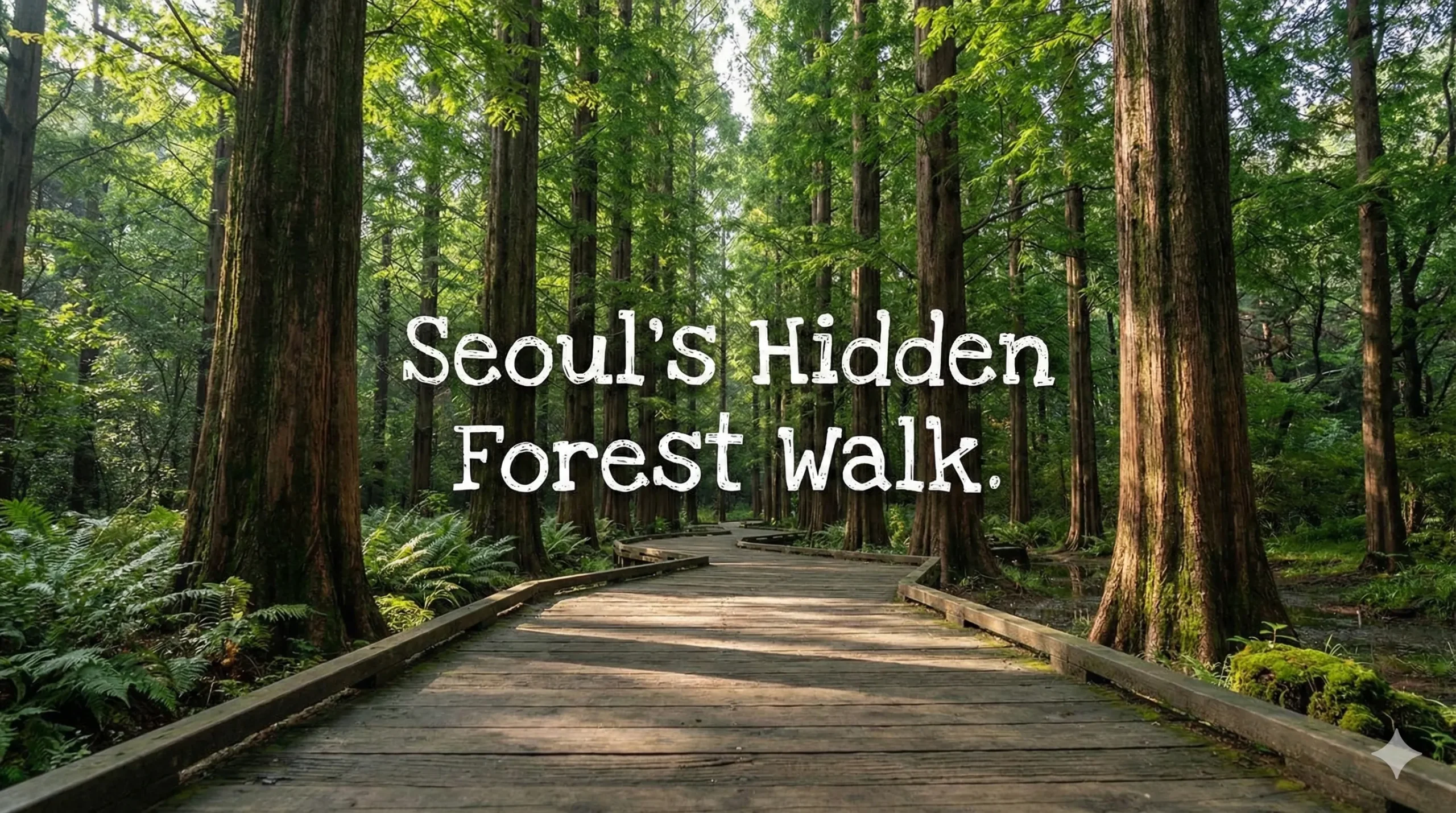
The crown jewel of this trail is the Metasequoia area. Tall, majestic trees line the wooden deck, creating a dense canopy that blocks out the city noise. This section is optimized for Shinrin-yoku (Forest Bathing). Research suggests that exposure to phytoncides released by these trees can lower stress levels and boost the immune system.
Comparative Insights: Inwangsan vs. Ansan Jarak-gil
Many tourists debate between visiting Inwangsan and Ansan, as they are geographically close. Here is the functional breakdown to help you decide.
| Feature | Inwangsan Mountain | Ansan Jarak-gil |
|---|---|---|
| Primary Goal | Reaching the Summit (Peak bagging) | Forest Bathing (Relaxation) |
| Terrain | Granite rocks, steep fortress walls | Wooden decks, dirt paths |
| Physical Toll | High (Sweat, knee strain) | Low (Casual walk) |
| Footwear | Hiking shoes recommended | Any comfortable flat shoe |
| Best For | Adventure seekers, Sunset views | Families, Seniors, Solitude |
Insight: If you want a dynamic workout with ancient fortress walls, choose Inwangsan. If you seek a peaceful retreat to clear your mind without physical strain, Ansan Jarak-gil is the superior choice.
Practical Step-by-Step Implementation
Step 1: Getting to the Trailhead
Important Note: While the trail itself is barrier-free, the access routes from subway stations involve steep uphill sections that may be challenging for manual wheelchair users or those pushing strollers without assistance.
The most straightforward entry point is via the subway.
- Take Line 3 (Orange Line) to Dongnimmun Station.
- Exit via Exit 4 or 5.
- Walk towards Seodaemun Independence Park. You will see signs for the “Seodaemun Prison History Hall.”
- Walk past the prison museum towards the hill. You will see yellow signs or wooden steps leading up towards the forest. Follow signs for “Jarak-gil.”
Step 2: Entering the Loop
Once you ascend the initial paved path from the park, you will encounter the beginning of the wooden deck system. Because it is a loop, you can walk in either direction (clockwise or counter-clockwise). Most locals prefer a counter-clockwise direction to reach the viewpoint decks earlier, but both directions offer a similar experience.
Step 3: The Forest Highlights
- The North Face (Views): As you circle the mountain, you will reach observation decks that offer a unique view of Inwangsan Mountain and the Blue House (Cheong Wa Dae) area. Unlike the city view from N Seoul Tower, this view highlights the topographical harmony of Seoul’s mountains.
- The Rest Areas: Midway through the forest sections, look for the designated “Forest Rest Areas.” These zones are equipped with sunbeds and hammocks. It is socially acceptable—and encouraged—to lie down here for 10–20 minutes to listen to the wind and birds.
- The Metasequoia Path: This usually appears in the latter half of the loop if you started counter-clockwise. It is the most photogenic section.
Step 4: Descent and Historical Combo
After completing the loop, you will descend back towards Seodaemun Independence Park.
- Seodaemun Prison History Hall: It is highly recommended to visit this museum after your walk. It is a sobering memorial dedicated to Korean independence activists imprisoned during the Japanese colonial period.
- Route Strategy: A morning walk (09:00–11:00) followed by the museum tour (11:00–12:30) creates a perfect balance of nature and history.
Step 5: Post-Hike Nutrition
There are no food vendors on the mountain itself. You must descend for food.
- Yeongcheon Market (Yeongcheon Sijang): Located across the street from Independence Park (about a 10-minute walk).
- What to Eat: The market is famous for Kkwabaegi (Twisted Korean Donuts). They are affordable, freshly fried, and coated in sugar—a perfect carbohydrate replenish after a 7km walk.
- Note: Vendor hours vary. Popular stalls like “Dalin Kkwabaegi” and “Wonjeo Kkwabaegi” often sell out by mid-afternoon (around 3-4 PM).
Troubleshooting & Common Pitfalls
1. “I want to go to the summit.”
The Jarak-gil is a circumference trail. If you strictly stay on the wooden deck, you will not reach the summit (Beacon Fire Station). To reach the summit of Ansan (296m), you must leave the wooden deck and take the steeper dirt paths marked “Summit” or “Bongsu-dae.” The summit offers excellent views but requires climbing stairs and rocks, breaking the “barrier-free” promise.
2. Restroom Access
Restrooms are clean but infrequent.
- Primary Restroom: Located at the entrance of the trail near the Seodaemun Museum of Natural History or above the Independence Park.
- Strategy: Use the restrooms at Dongnimmun Station or the park entrance before ascending.
3. Weather Considerations
While the wooden decks are well-maintained, they can become slippery during rain or light snow. In winter, even if the city streets are clear, shaded sections of the forest deck may have thin ice. Walk with caution during these conditions.
FAQ & Pro-Tips
Q: Is the trail safe at night?
A: Generally, yes. Ansan Jarak-gil is one of the few trails in Seoul with lighting installed along significant portions of the boardwalk for evening walks. However, for the best visibility and safety, finishing your walk before 9:00 PM is recommended.
Q: Can I bring a stroller or wheelchair?
A: Yes. This is the defining feature of the trail. The gradients are gentle enough for manual wheelchairs, though an electric wheelchair or a companion for assistance makes the experience smoother on the long uphill sections.
Q: Do I need to bring water?
A: Yes. There are no convenience stores or vending machines on the trail loop. Purchase water at the convenience store inside Dongnimmun Station before you exit.
Pro-Tip: If you are visiting during the spring (early April), Ansan is famous for its cherry blossoms. The cherry blossom tunnel near the trailhead is less crowded than Yeouido but equally spectacular.