Daiso Korea: A Korean’s Honest Take on the Shop Tourists Love
I’ll be honest with you. As a Korean, I don’t spend much of my daily life inside Daiso. It’s just a normal everyday shop to me, the place I drop into when I need a phone cable or a storage box. But every time I walk through a big tourist area like Myeongdong, I notice how many foreign visitors are streaming in and out of Daiso with full bags. That’s what made me want to write this. If this many travelers are clearly finding something here, it’s worth explaining what’s actually good, from the perspective of someone who lives here.
I get the appeal, because I do the same thing in reverse. Whenever I travel to Japan, I end up in Seria, the 100-yen shops, or Daiso Japan, and I walk out with a basket of little souvenirs. There’s something fun about a cheap, well-organized shop full of small local things you can actually carry home. Daiso Korea is that kind of place for visitors here.
First, what Daiso Korea actually is
In a lot of Western countries, a “dollar store” suggests cheap, throwaway stuff. Daiso Korea isn’t really that. It’s a tidy, well-organized chain where nothing costs more than 5,000 won (a little under $4), and most things sit around 1,000 to 3,000 won. For what you pay, the quality is genuinely fine, especially for storage items, stationery, and small tech accessories.
It’s also worth knowing that Daiso Korea is now its own Korean company, not a branch of the Japanese one, so a lot of what’s on the shelves is made for Korean tastes. In the bigger stores, each floor tends to have its own theme: stationery on one, beauty on another, then kitchen goods, character items, and so on.
A local gift habit you might find sweet
Here’s one thing I don’t think many travel guides mention, and it’s the part I most wanted to share.
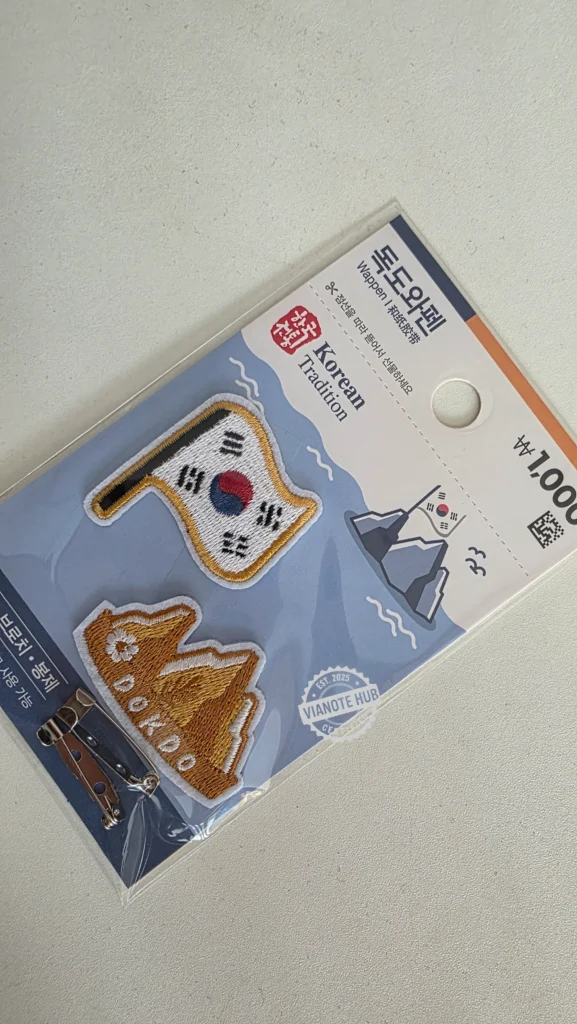
When Koreans travel abroad, a lot of us stop by Daiso before we leave the country and buy a handful of small, clearly Korean trinkets, usually keyrings. They’re light, they’re cheap, and they fit in any bag. The reason is that on a trip you often meet people who are kind to you for no real reason: someone who stops to walk you to the right exit, or a guesthouse owner or Airbnb host who goes out of their way. Handing them a little keyring from Korea is a small, genuine way to say thank you.
So if you’re visiting Korea, the same logic works in reverse. A few Hangeul-design keyrings or small traditional-pattern items from Daiso make thoughtful, inexpensive gifts to bring home, and they’re the kind of thing you’d never find in an airport shop at that price.
What travelers tend to buy here
From what I see filling people’s baskets, and what I’d grab myself, a few categories stand out.
Beauty. Daiso works with real Korean cosmetic makers, so you’ll find budget versions of popular skincare under store-exclusive labels. Some items sell out fast, so mornings are your best bet if there’s something specific you’re after.
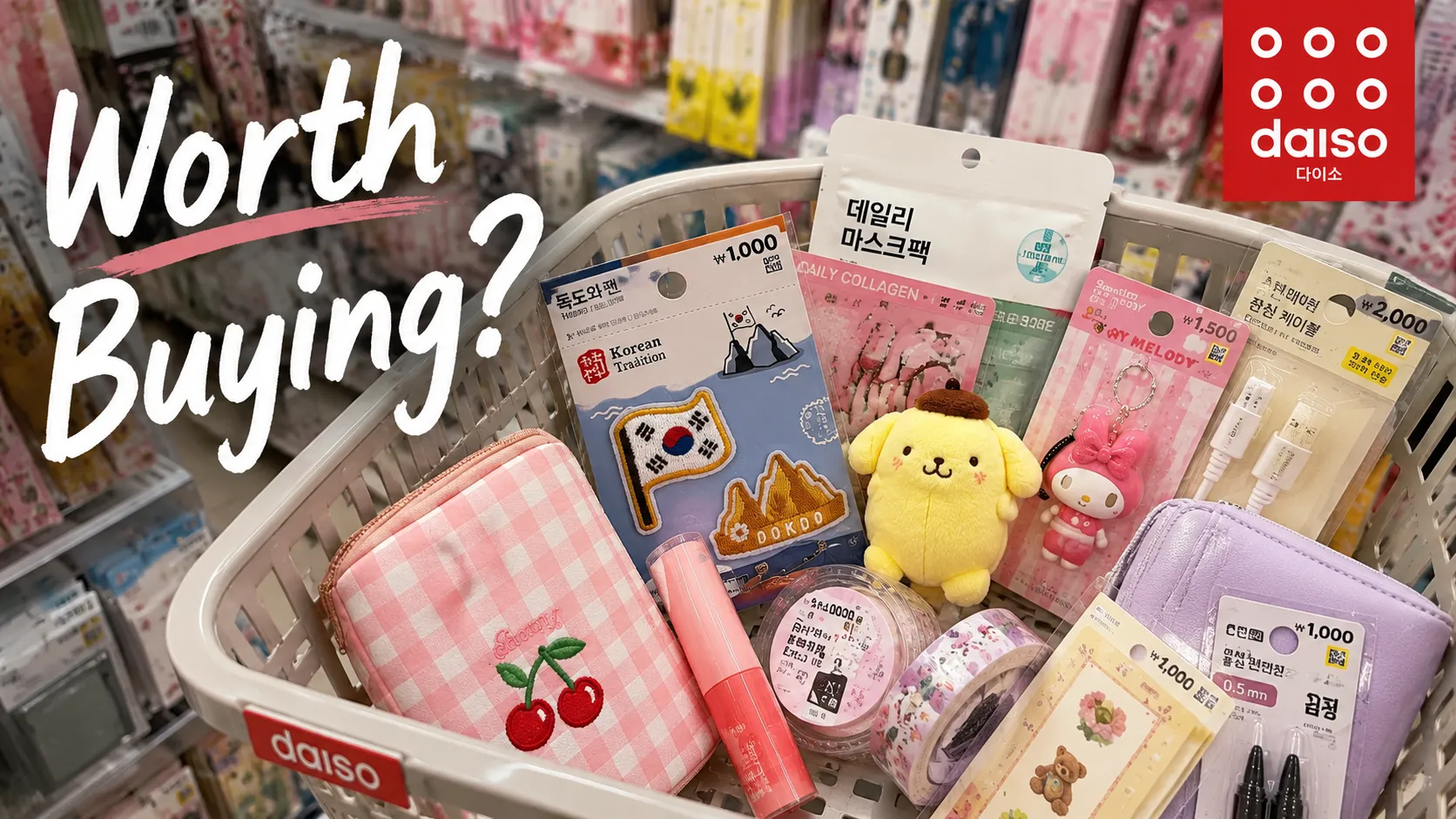
Souvenirs and gifts. Look for the Korean-themed lines: keyrings, bookmarks, stickers, and pouches with Hangeul or traditional patterns. The character collaborations (Disney, Sanrio and others) are official, and they make cute, packable gifts.
Travel basics you forgot. This is where Daiso really earns its place. Travel-sized toiletry bottles, compressed towels, charging cables, plug adapters, even a cheap pair of earphones. If you left something in your other suitcase, this is the cheapest fix in the city.
One small warning on electronics: Korea runs on 220V with Type C and F plugs. Daiso sells adapters but not voltage converters, so make sure your hair dryer or styler is dual-voltage before you plug it in.
Finding a store and paying
To find the nearest branch, use Naver Maps or KakaoMap rather than Google Maps, which is unreliable for walking directions in Korea. Search “다이소” or “Daiso.” The big tourist-area branches (Myeongdong, Hongdae, Gangnam) carry the widest range of beauty and souvenir items.
The Daiso right by Myeongdong Station is the famous one: a 12-floor store, renovated in 2023, with multilingual floor guides and self-checkout. It’s a lot to take in, but it’s an easy place to lose an hour. Most stores open around 10:00 and close around 22:00, though it’s worth checking hours on Naver Maps.
At checkout, most stores use self-service kiosks with an English option, and international cards are widely accepted. Note that plastic bags aren’t free in Korea (there’s a small charge), so bring your own or buy a reusable bag for a few hundred won.
About the tax refund (the current rules)
Since this is the part that changes most often, here’s the up-to-date version rather than my own experience.
Foreign visitors can get an instant tax refund on eligible purchases at major Daiso branches in tourist areas. As of 2026, the minimum is a single purchase of 15,000 won, though some stores still apply the older 30,000-won line, so it varies. You’ll need your physical passport at the kiosk, and the tax comes off your total on the spot, so you don’t have to queue at the airport.
Because these thresholds shift from year to year, double-check the current details before you count on them.
Is it worth your time?
If you enjoy a tidy, cheap shop full of small, local things, yes. If you’re more of a “see the sights, skip the shops” traveler, you won’t miss much. For me, Daiso isn’t a destination so much as a useful stop, somewhere to grab a forgotten charger or a stack of little gifts. But I completely understand why so many visitors treat it as a highlight, because I do exactly the same thing every time I land in Japan.
Prices, store hours, and tax-refund rules can change. Check Naver Maps for store details and the official tax-refund information before you travel.