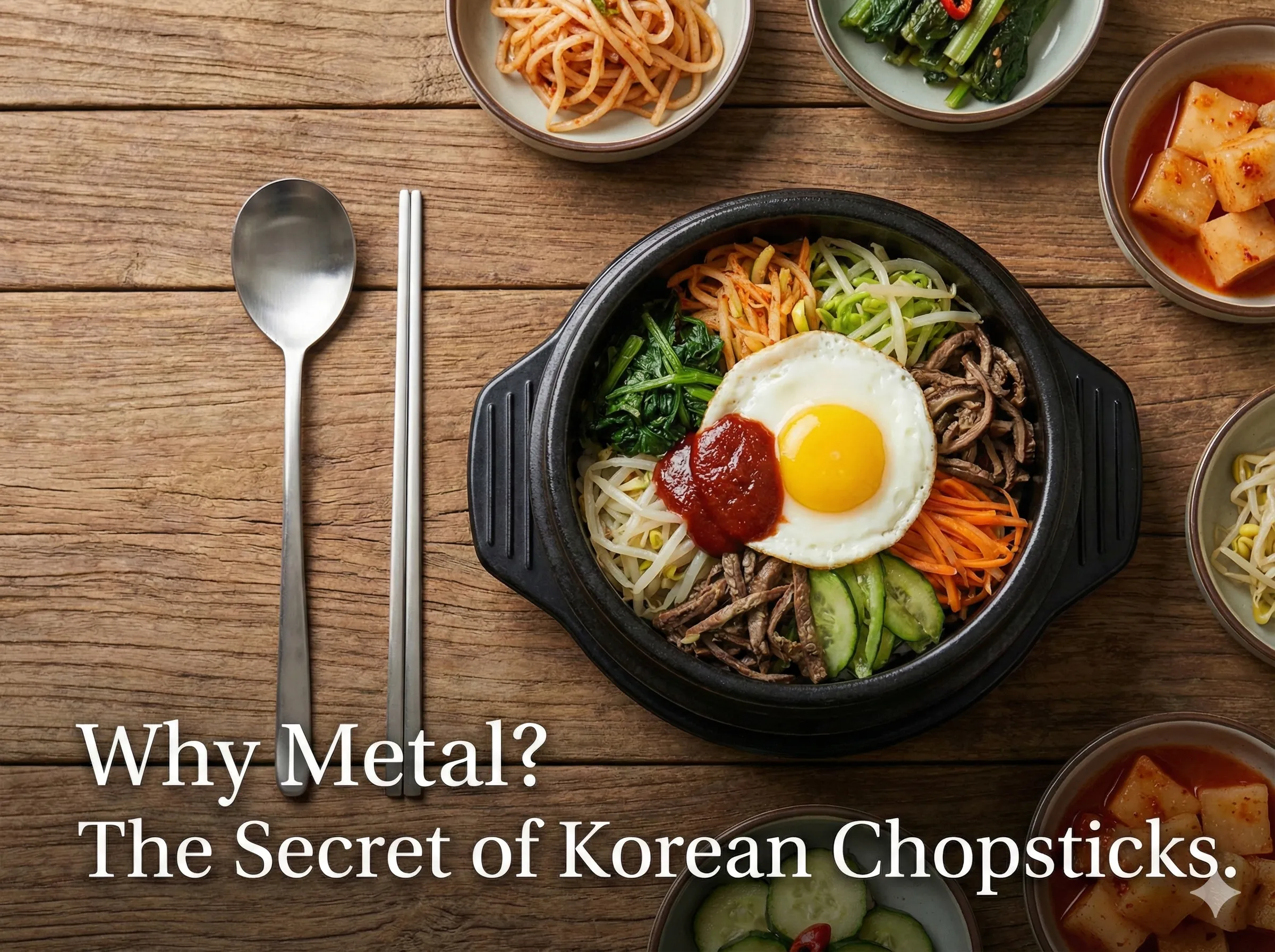
Korean Metal Chopsticks: What I Wish Every Visitor Knew Before Their First Meal
The first time I took a friend from abroad to a Korean restaurant, she picked up the chopsticks, paused, and said, “Wait, these are metal?” Then she spent the next few minutes quietly fighting with a piece of kimchi. As a Korean, I had honestly never thought about it. Metal chopsticks were just… chopsticks. But watching her struggle made me realize how strange they must feel if you grew up with wooden ones.
So if you’re planning a trip to Korea and feeling a little nervous about the dinner table, this is the friendly heads-up I’d give you before we sat down to eat.
Wait, why are they metal?
Most first-time visitors notice two things right away: Korean chopsticks are heavier than wooden ones, and they’re more slippery. That combination can make you feel like you’ve forgotten how to use chopsticks entirely, even if you’ve used them your whole life. Don’t worry, that reaction is completely normal.
The simple reason they’re metal is hygiene and reuse. Korean restaurants run their utensils through high-heat sterilizers, and stainless steel handles that easily without warping or wearing out. One set can last for years, so you almost never see disposable wooden chopsticks at a regular Korean meal. There’s also a very practical food reason: Korean barbecue. When you’re grilling meat right at your table over hot charcoal or a gas burner, wooden chopsticks would scorch. Metal ones don’t care.
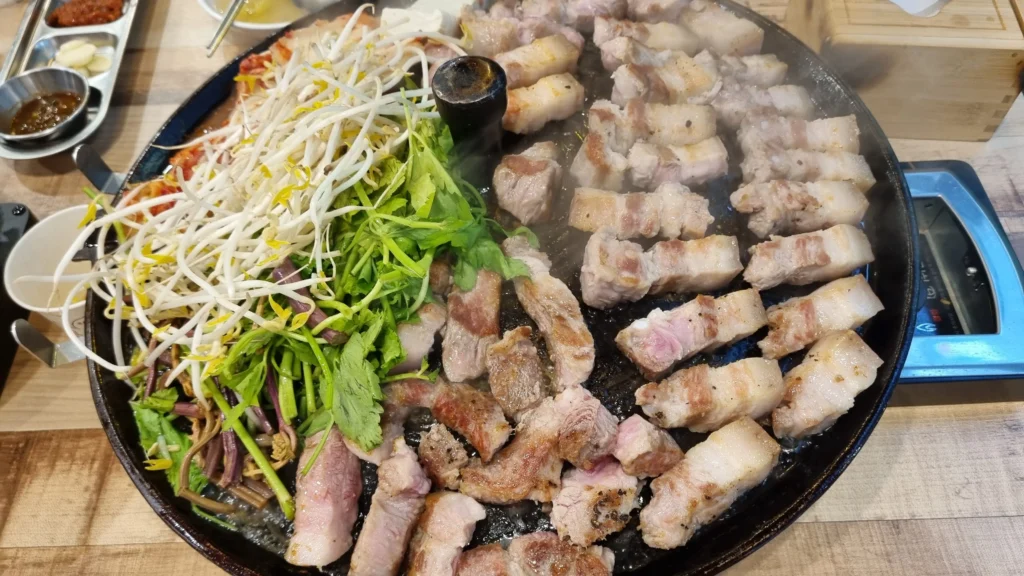
They’re also flat rather than round, which feels unusual at first. One thing I noticed when I started paying attention is that the flat shape actually grips heavy, marinated meat and slippery side dishes better than you’d expect, once your fingers adjust.
The spoon is your best friend
Here’s the single most useful thing I can tell you, and it’s the part most visitors miss: in Korea, the spoon does a lot of the work.
Koreans eat with a matched set of a spoon and chopsticks. The spoon is for rice and soup. The chopsticks are for the side dishes and meat. This is different from how people eat in Japan or China, where it’s common to lift the bowl close to your mouth. In Korea, the bowl usually stays on the table, and you bring the food up with your spoon or chopsticks instead.
So if you’re staring at a bowl of rice wondering how on earth you’ll pick up every grain with slippery metal sticks, the answer is: you don’t. Use the spoon. Honestly, trying to eat Korean rice with chopsticks is the hard way to do it, and locals will just use the spoon too.
How to actually hold them without your hand cramping
Because metal is heavier than wood, the trick is to let the weight work for you instead of fighting it.
Rest the bottom chopstick in the valley between your thumb and index finger, and let it sit still. That one never moves. Then hold the top chopstick like a pencil and let only that one do the pinching. If your hand gets tired fast, try gripping a little further up the chopsticks rather than near the tips. The extra length gives you more leverage, so you press harder at the ends with less effort. Many first-time travelers find this small change makes everything click.
And here’s a reassuring secret: plenty of Koreans don’t have textbook-perfect form either. Nobody at the table is grading you.
A few things that look rude but are easy to avoid
There are only a couple of table habits worth remembering, and they’re easy.
First, don’t stand your chopsticks upright in a bowl of rice. This is the big one across many Asian cultures, Korea included, because it looks like the incense burned at funerals. Just lay them flat across the top of your bowl, on a chopstick rest, or on the table.
Second, try not to hold the spoon and chopsticks in the same hand at the same time. Use one, set it down, then pick up the other. It feels a little slow at first, but it quickly becomes natural, and it’s how the rhythm of a Korean meal is meant to flow.
That’s really it. You don’t need to memorize a long list of rules to eat politely in Korea. These two cover almost everything a visitor worries about.
It’s totally okay to ask for the wooden ones
If you’ve tried for a few minutes and the metal chopsticks just aren’t working for you, please don’t suffer through your meal. It’s completely fine to ask for disposable wooden chopsticks. Many places have them, especially spots used to tourists, and no one will think less of you for asking. I’ve handed wooden chopsticks to more than one visiting friend, and the meal went a lot more happily after that.
Noodles are the classic trouble spot. If they keep sliding off, a trick locals use is to rest the noodles on the spoon as a little base while you lift them. It feels like cheating, but it isn’t.
You’ll get the hang of it faster than you think
Metal chopsticks really do feel awkward for the first meal or two. That’s not a sign you’re doing anything wrong, it’s just your hands learning a slightly different tool. By the second or third day of a trip, most visitors stop thinking about it at all.
The truth is, the table in Korea is a relaxed, shared place. People are far more interested in whether you’re enjoying the food than in how you’re holding your chopsticks. So pick up that spoon, grab a piece of grilled pork belly with your slightly heavy metal sticks, and don’t stress. A little fumbling on day one is part of the trip.