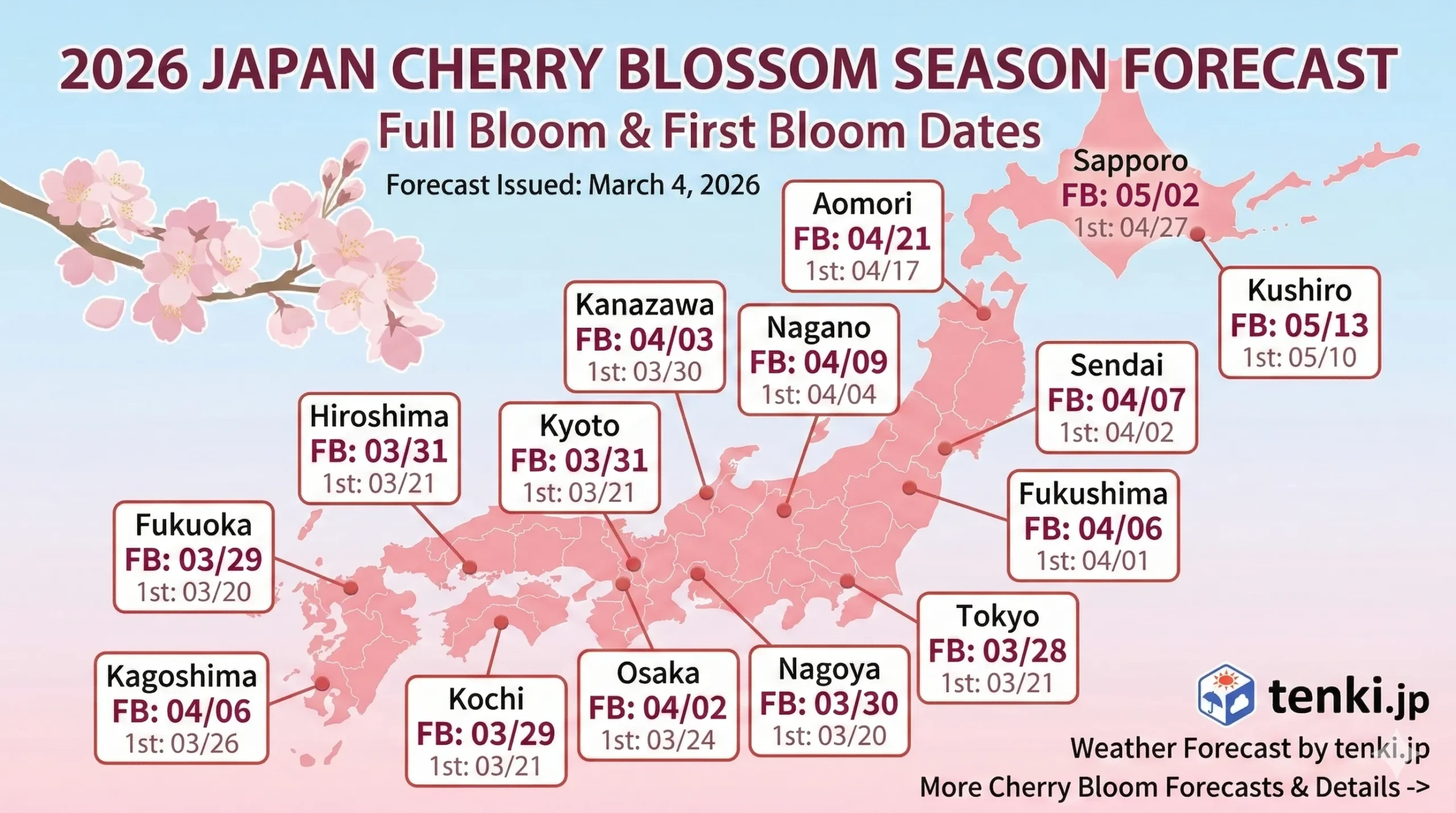
2026 Japan Cherry Blossom Forecast: Best Peak Dates & Guide
The Magic of the Pink Wave: Why Timing is Everything in 2026
Witnessing the cherry blossoms in Japan is a bucket-list experience that transforms the entire country into a living watercolor painting. However, because the peak bloom lasts only about a week, missing the window by even a few days can mean the difference between seeing lush pink canopies or bare green leaves. According to the latest data released on March 4, 2026, the “Sakura Zensen” (Cherry Blossom Front) is moving faster than usual this year, making proactive planning essential for every traveler.
Quick Guide & Key Takeaways
- Nationwide Leader: Uwajima (Ehime) is expected to be the first to bloom on March 18 and reach full bloom by March 25.
- Major City Peaks: Tokyo’s official bloom starts March 21, with full bloom predicted for March 28.
- Early Trend: Most regions in East and North Japan are seeing blooms 2 to 4 days earlier than the 30-year average.
- Source Credit: All data is based on the March 4, 2026, update from the Japan Weather Association (tenki.jp).
Landscape & Challenges: The Science of the 2026 Bloom
The timing of the cherry blossom depends on a delicate balance between winter “chilling” and spring “warming.” For a tree to bloom, it must first experience a period of cold to break its dormancy, followed by a steady rise in temperature to encourage bud growth. In 2026, Japan experienced unusually high temperatures starting in mid-February, which significantly accelerated the growth of the flower buds across the archipelago.
One of the primary challenges for 2026 travelers is the “unstable heat” factor. While February was warm, early March saw a brief cooling trend in Western Japan and Kanto, causing some previously predicted dates to be pushed back by a day. Conversely, the Tokai region experienced higher-than-expected temperatures, leading to an even earlier forecast. This volatility means that travelers must remain flexible and check official updates frequently as their departure date approaches.
Core Guide: 2026 Regional Forecast Breakdown
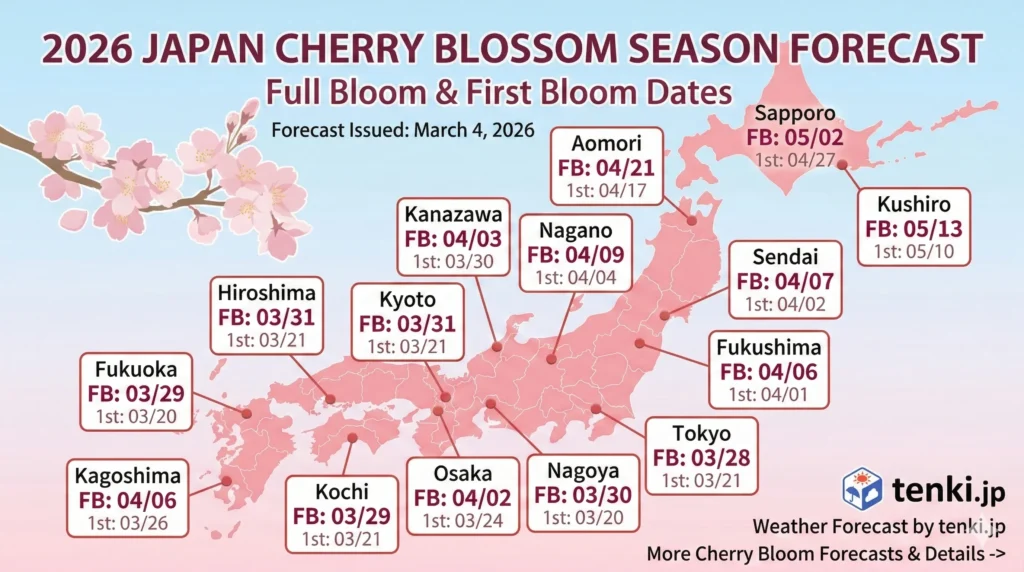
Generally, the cherry blossom front moves from the warmer south (Kyushu) toward the colder north (Hokkaido). Here is the standard expectation for the 2026 season based on the latest March 4th forecast from tenki.jp.
South & West Japan (Early to Mid-March)
- Fukuoka: Flowering begins March 20, with full bloom reached by March 29.
- Nagoya: Flowering starts March 20, peaking on March 30.
- Hiroshima: Flowering begins March 21, with full bloom on March 31.
- Kochi: Flowering starts March 21, reaching full bloom by March 29.
- Kagoshima: A slightly later start than neighbors, flowering on March 26 and peaking on April 6.
Central Japan (Late March to Early April)
- Tokyo: The capital’s official start is March 21, with the highly anticipated full bloom on March 28.
- Kyoto: Expected to flower on March 21 and reach full bloom by March 31.
- Osaka: Bloom starts March 24, with the peak arriving on April 2.
- Kanazawa: Flowering on March 30, peaking on April 3.
- Nagano: A cooler mountainous start on April 4, with full bloom on April 9.
North Japan & Hokkaido (April to May)
- Sendai: Flowering begins April 2, with full bloom on April 7.
- Aomori: Flowering starts April 17, peaking on April 21.
- Sapporo: The cherry blossom front reaches Hokkaido on April 27, with full bloom expected during the Golden Week holidays on May 2.
- Kushiro: One of the final spots, flowering on May 10 and peaking on May 13.
Comparative Insights: Flowering vs. Full Bloom
It is important to distinguish between “Flowering” (Kaika) and “Full Bloom” (Mankai). Standard procedure defines flowering as the moment when at least five to six flowers open on a designated “sample tree”. Full bloom is defined when 80% or more of the buds on that tree have opened.
For the best photography and “Hanami” (flower viewing) experience, you should aim for the dates listed as “Full Bloom.” In 2026, the gap between flowering and full bloom is generally 7 to 10 days in most major cities. For example, in Tokyo, you have a one-week window starting from March 28 to see the trees at their absolute densest before the “Sakura Fubuki” (cherry blossom blizzard) begins, where petals start to fall like snow.
Step-by-Step: How to Plan Your Sakura Itinerary
- Choose Your Priority Region: Decide if you want the classic Tokyo/Kyoto experience (late March) or the cooler, less crowded Hokkaido experience (late April/early May).
- Book “Refundable” Accommodations: Because weather can shift the bloom by several days, having a flexible hotel booking allows you to chase the blossoms if they arrive earlier or later than expected.
- Monitor the “Flowering” Reports: Once a city reaches its flowering date, you typically have exactly one week to arrive before the peak full bloom begins.
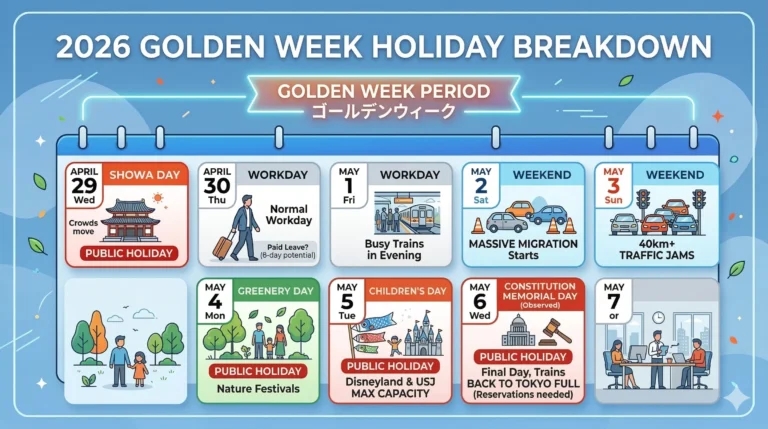
- Prepare for “Golden Week”: If you are targeting Hokkaido, remember that the full bloom on May 2 coincides with Japan’s major Golden Week holidays. Travel will be busy, so book trains in advance.
Troubleshooting & FAQ
What happens if it rains?
Standard procedure for Hanami is to watch the wind and rain forecasts. Heavy rain or strong winds during the full bloom stage can strip the trees of their petals in a single night. If rain is forecast, try to visit the parks a day early.
Is the forecast always 100% accurate?
Generally, forecasts become highly accurate within two weeks of the date. The March 4th update is the most comprehensive to date, but sudden temperature spikes can still move dates by 1-2 days. Check the official website for updates as you travel.
Where can I find the most up-to-date data?
This guide uses data from the Japan Weather Association (tenki.jp). We recommend checking their official portal daily starting in mid-March for real-time “live” bloom status maps.
Disclaimer: Nature is unpredictable. This forecast is based on current meteorological data and should be used as a general guide for travel planning. Check official government weather agencies for the most recent updates.
Also traveling to South Korea? Click here for the ultimate guide to Korea’s cherry blossom season.

One Comment