Is Tap Water Safe in Korea? Why Restaurants Offer Free Purified Water
Drinking Water in Korea: A Complete Guide to Free Water, Purifiers, and Local Etiquette
For international travelers visiting South Korea, the accessibility and generosity regarding drinking water are often a pleasant surprise. Unlike many Western European or North American countries where bottled water is a standard charge on a restaurant bill, South Korea treats drinking water as a basic hospitality standard.
The country has developed a sophisticated “water purifier culture” that ensures high-quality, filtered water is available almost everywhere—from small neighborhood diners to luxury department stores. Understanding the local standards for hydration will not only save you money but also help you navigate Korean social etiquette like a local.
The Landscape & Challenges: Why Water in Korea is Different
The primary challenge for visitors is the cultural gap between “potable water” and “preferred drinking water.” In countries like Germany, Australia, or the USA, drinking directly from the kitchen tap is common. In Korea, while the public water supply (branded as Arisu in Seoul) is strictly monitored and meets all WHO safety standards, locals rarely drink it straight from the tap.
This preference stems from a historical distrust of old piping in aging buildings. As a result, the “Water Purifier” (Jeongsugi) has become an essential appliance in every Korean home and business. For a traveler, this means you will almost never be served “tap water” in a restaurant; instead, you will receive either bottled water or, more commonly, water filtered through a high-tech purification system.
The Core Guide: The Local Standard of Water Purifiers
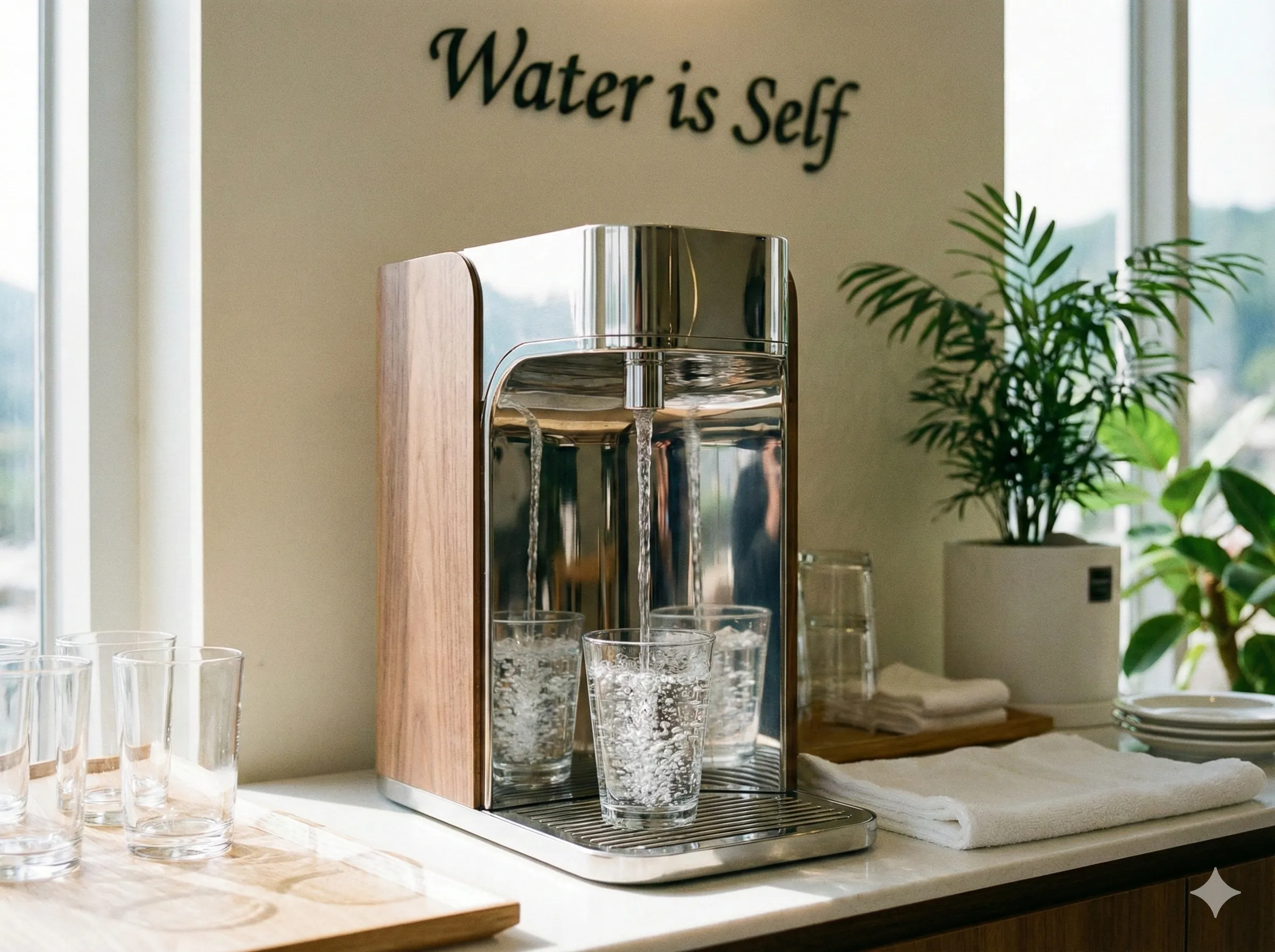
The backbone of South Korean drinking water culture is the advanced Water Purifier. These are not simple carbon filters; they are sophisticated machines that provide instant chilled or boiling water.
1. The “Self” Culture (Mul-eun Self)
In many casual dining establishments, you will see a sign: “물은 셀프” (Mul-eun Self). This translates to “Water is self-service.” In these settings, servers will not bring water to your table. You are expected to locate the purifier and serve yourself.
2. Safety and Direct-Flow Technology
Korean consumers are exceptionally sensitive to water quality. Modern purifiers in Korea have largely transitioned to Direct-Flow (Jik-su) systems. Unlike older models that stored water in tanks (which could potentially harbor bacteria), direct-flow systems filter the water instantly as it is dispensed, ensuring maximum freshness and safety. Furthermore, most businesses have strict maintenance contracts where professionals sanitize the machines and replace filters every few months.
Comparative Insights: International vs. Korea
| Feature | Western Standard | South Korean Standard |
|---|---|---|
| Tap Water | Commonly consumed directly. | Potable but filtered/boiled is preferred. |
| Restaurant Water | Often paid (bottled) or free tap. | Always free (filtered or tea). |
| Public Access | Drinking fountains. | High-tech purifiers in malls/stations. |
| Hotels | Plastic bottles provided. | Transitioning to in-room purifiers. |
In Korea, water is a right, not a luxury. You will find high-quality purifiers in department stores like Shinsegae or Hyundai, and even in subway stations, allowing you to stay hydrated without spending a won.
Practical Step-by-Step Implementation
To avoid any social faux pas and use the equipment correctly, follow this manual:
1. Locate the Cups
Near the water purifier, you will find cups. These are usually stored in one of two ways:
- UV Sterilizer: A small stainless steel cabinet with a blue light. The cups inside are sanitized and ready for use.
- Disposable Envelope Cups: In many public spaces or smaller shops, you might see thin, flat paper cups that you must pull open to create a small “envelope” for the water.
2. Select Temperature
Most machines feature two or three options:
- Cold (Naeng-su): Marked with Blue.
- Ambient (Jeong-su): Room temperature.
- Hot (On-su): Marked with Red. Caution: The hot water is typically near boiling point (around 85-95°C), intended for tea or coffee. Handle with extreme care.
3. Usage Etiquette (Refilling Tumblers)
While the water is free, there are unspoken rules regarding “takeout”:
- On-site Consumption: The water provided is primarily intended for use while you are dining or visiting the establishment.
- Personal Tumblers: If you wish to fill a small personal tumbler, it is polite to ask for permission first. Most staff will agree, but some may prefer you only drink from the provided cups.
- Large Bottles: Filling large 1.5L or 2L plastic bottles to take away is considered “Min-pae” (a nuisance or bad etiquette). It is seen as taking advantage of the business’s generosity.
Troubleshooting & Common Pitfalls
“The water is brown or has a scent.”
This is likely not water, but Tea. Many traditional restaurants serve chilled Barley Tea (Boricha) or Corn Tea (Oksusu-cha). These are healthy, caffeine-free, and provided for free. If you prefer plain water, you can almost always find a purifier nearby.
Buying Bottled Water (Saeng-su)
If you are on the move and need a bottle:
- Premium Brands: Samdasoo (volcanic bedrock water from Jeju Island) is the most popular and slightly more expensive.
- Budget: Convenience stores (CU, GS25, 7-Eleven) sell their own “PB” (Private Brand) water for as low as 600-900 KRW.
- Pro-Tip: Buying water at a large supermarket (E-Mart, Lotte Mart) is significantly cheaper than at a convenience store or tourist attraction.
Hotel Hydration Trends
Luxury hotels like the Grand Hyatt or Park Hyatt Seoul are leading an eco-friendly trend by installing high-end purifiers in guest rooms instead of providing plastic bottles. This saves travelers the time and effort of lugging heavy water packs from the supermarket while ensuring unlimited access to clean water.
FAQ & Pro-Tips
Q: Is it safe to drink from the bathroom sink in Korea?
A: Technically yes, it is the same water. However, culturally, Koreans do not do this. It is always better to use the purifier or provided bottled water.
Q: Why do I see people using shower filters?
A: Koreans are very protective of their skin and hair. Shower filters are used to remove any residual chlorine or micro-particles from older pipes. It doesn’t mean the water is “unsafe,” but rather that Koreans have an exceptionally high standard for “purity.”
Q: Where can I find free water while shopping?
A: Most department stores have “Customer Lounges” or designated water stations near the restrooms or elevators. These are free to use even if you don’t buy anything.
Liability Disclaimer: While Korea’s water infrastructure is world-class, the quality of maintenance in individual private establishments can vary. If you have an extremely sensitive digestive system, we recommend sticking to bottled water (Saeng-su). Always check official municipal websites (like Seoul’s Arisu page) for the most current water safety reports.
Stay hydrated and enjoy the world-class convenience of Korea’s unique water culture!