Why are Korean Chopsticks Metal and Flat? | The Ultimate Guide
The Landscape of Korean Dining: Why Metal Matters
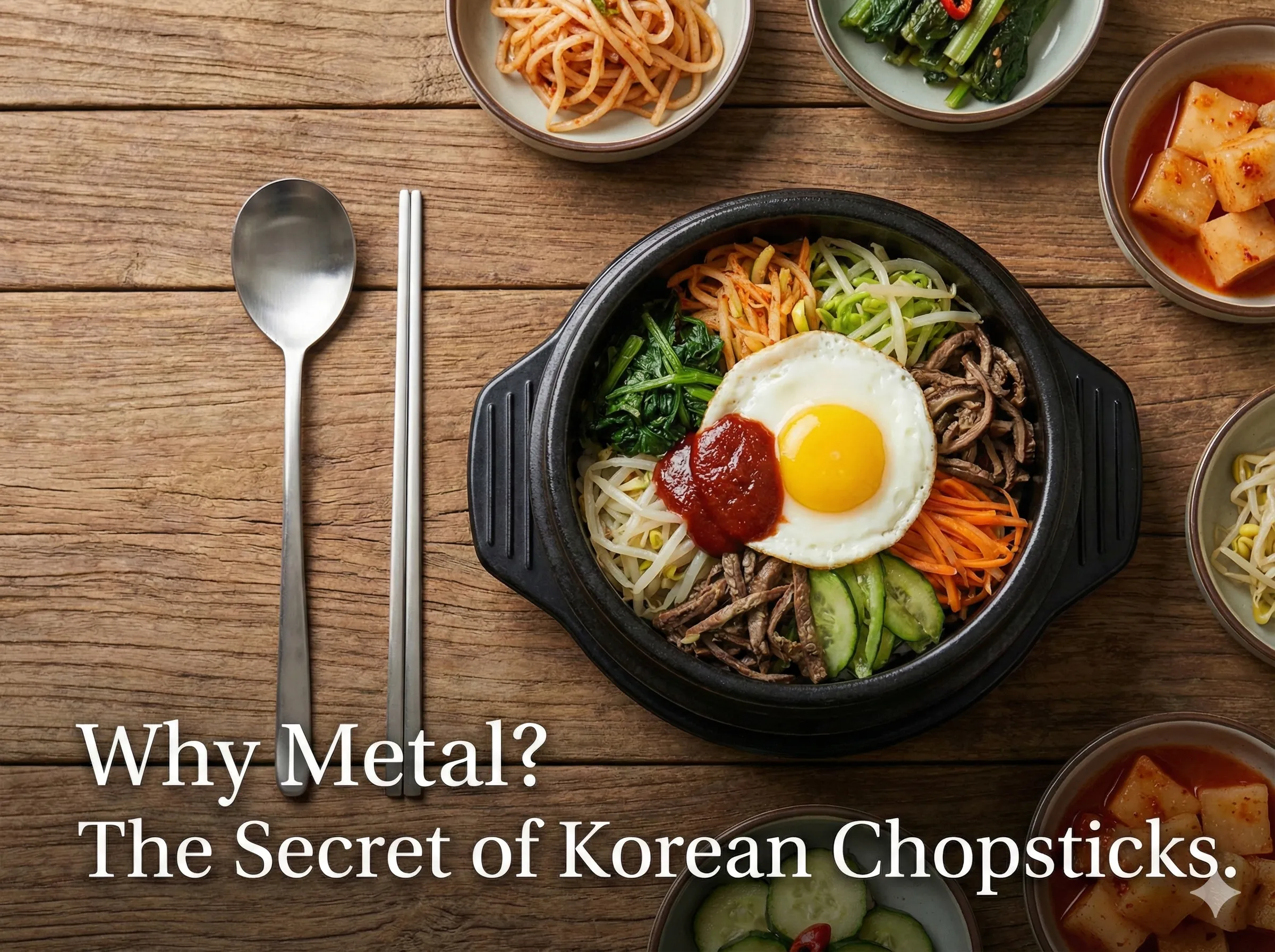
For first-time visitors to Seoul, the dining table presents an unexpected hurdle: the metal chopstick. Unlike the rounded wooden sticks found in Japan or the long, thick plastic ones in China, Korean chopsticks (Cheot-garak) are typically made of stainless steel and feature a distinctly flat, heavy profile. This can be intimidating, as metal is naturally more slippery and heavier than wood. However, this design is the result of centuries of refinement aimed at balancing health, practicality, and social etiquette.
The primary challenge for foreigners is the lack of friction. If you are used to the “grip” of bamboo, metal feels like learning to eat all over again. Yet, understanding the why behind this cultural staple transforms a frustrating meal into an appreciative cultural experience. In Korea, the dining table is a place of shared community, and the tools used reflect a commitment to cleanliness and longevity.
Core Guide: Understanding the “Su-jeo” Standard
In the Korean context, you will rarely find chopsticks sitting in isolation. They are part of a pair called Su-jeo (a portmanteau of Sut-garak for spoon and Cheot-garak for chopsticks). This distinction is vital because, unlike in many other Asian cultures where the bowl is lifted to the mouth, Koreans keep their bowls on the table and use a spoon for rice and soup.
Material and Durability
- Stainless Steel: The modern standard. It is rust-resistant, incredibly durable, and can withstand the high-heat sterilization processes common in Korean restaurants.
- Historical Silver (Eun-jeo): Historically, the royalty of the Baekje Kingdom used silver chopsticks because silver tarnishes (turns black) when it comes into contact with certain toxins, such as arsenic. This served as a literal life-saving tool for the monarchy.
- Brass (Bang-jja): For formal occasions or high-end traditional meals, you may encounter heavy, gold-colored brassware. These are prized for their natural antimicrobial properties.
The Logic of the Flat Shape
The most frequent question asked is, “Why are they flat?” The answer is dual-purposed. First, Korean tables were historically small and portable (Soban). A round chopstick would easily roll off the table onto the floor. Second, the flat shape provides a unique “pinching” leverage required to tear pieces of kimchi or pick up heavy, marinated meats without the sticks bending or the food slipping sideways.
Comparative Insights: Korea vs. Neighbors
To understand the Korean style, it helps to look at how it compares to its neighbors without suggesting one is superior to the other. Each evolved to suit a specific culinary landscape.
- Chinese Chopsticks: Generally long and thick, often made of wood or plastic. This design facilitates reaching across large, rotating circular tables to grab food from shared platters. The rounded ends are ideal for picking up rice from a bowl held close to the face.
- Japanese Chopsticks: Usually shorter and tapering to a very sharp point. This is specifically designed for deboning fish, which is a staple of the Japanese diet. They are almost exclusively made of wood to provide maximum grip for delicate sushi and sashimi.
- Korean Chopsticks: Medium in length and made of metal. Because Koreans use a spoon for rice, the chopsticks are strictly for side dishes (Banchan) and meat. The metal construction is essential for Korean BBQ, where wooden sticks would likely char or catch fire over the open charcoal grills.
Step-by-Step: Mastering the Metal Grip
Standard procedure for using metal chopsticks involves a slightly different muscle memory than wooden ones. Because they are heavier, the “fulcrum” or the point where the sticks balance is more critical.
- Step 1: The Anchor. Place the first chopstick in the valley between your thumb and index finger, resting it on the side of your ring finger. This stick should remain stationary.
- Step 2: The Pivot. Hold the second chopstick like a pencil, using your thumb, index, and middle fingers. This is the only stick that should move.
- Step 3: Finding the Balance. Because metal is heavy, try gripping them slightly further back (about 2/3 of the way up). This uses the weight of the metal to your advantage, creating more pressure at the tips with less effort.
- Step 4: The Spoon Transition. Remember the etiquette: do not hold the spoon and chopsticks at the same time in one hand. Use one, then set it down before picking up the other.
Troubleshooting & FAQ
Even with practice, using metal chopsticks can be tricky. Here are solutions to common issues and answers to frequently asked questions. Please check the official tourism guides or local etiquette blogs for regional variations in table manners.
- “The chopsticks are too slippery for noodles!” This is a common struggle. In many cases, Koreans will use the spoon as a base to “nest” the noodles, or simply use more tension. If you are struggling at a restaurant, it is perfectly acceptable to ask for a set of wooden disposables (Namu-jeotgarak).
- “Are metal chopsticks environmentally friendly?” Yes. One of the greatest advantages of the Korean preference for metal is the massive reduction in waste. Unlike the billions of disposable wooden sticks discarded annually worldwide, a single set of stainless steel Su-jeo can last a lifetime.
- “Why is it rude to stick them upright in rice?” This is a universal taboo in many Asian cultures, including Korea. It resembles the incense burnt at funerals for the deceased. Always lay them flat on the table or a chopstick rest.
- “My hand gets tired quickly.” Metal is heavy! This is often cited as a reason why Koreans have such high “finger dexterity,” often jokingly linked to the country’s success in fields like archery, e-sports, and semiconductor assembly. Take breaks and use your spoon more often for rice and small beans.
Ultimately, the Korean metal chopstick is a symbol of resilience and cleanliness. It may take a few meals to get used to the weight and the texture, but once you master it, you’ll find that other utensils feel flimsy by comparison. It is the literal “weight” of Korean tradition in the palm of your hand.