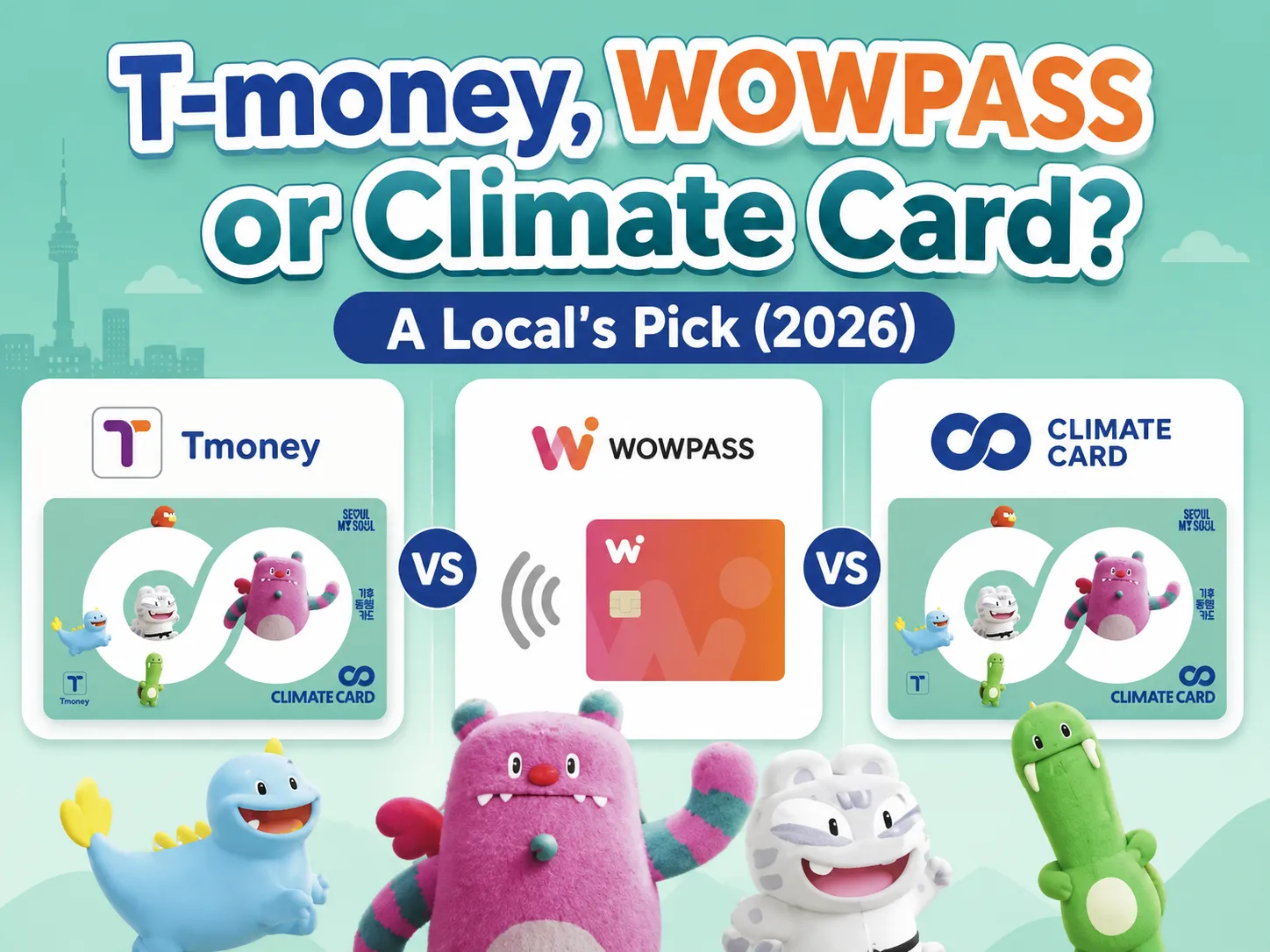
T-money, WOWPASS or Climate Card? A Local’s Pick (2026)
That Line at Samseong Station
A while back, I was passing through Samseong Station — one of the busiest stops in Seoul, right next to COEX — and I saw a long line of tourists crowded around the ticket machines. Some were trying to buy single-use subway tickets. Others were trying to figure out how to get their 500 KRW deposit back after their ride.
I wanted to help. But honestly? As a Korean, I’ve never used a single-use subway ticket in my life. I just tap my credit card at the gate and walk through. I didn’t even know how the deposit refund machine worked.
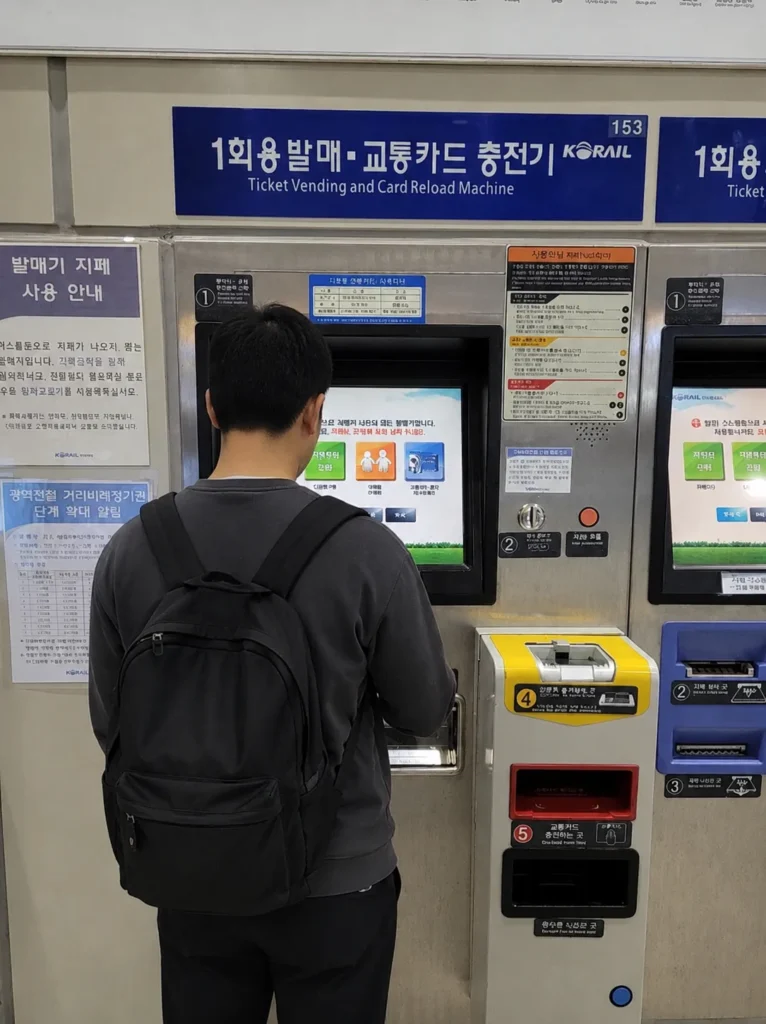
That moment stuck with me. And it’s a big part of why I originally wrote a guide about transportation cards in Korea back in 2025.
But here’s the thing — a lot has changed since then. Subway fares went up. New card options launched specifically for tourists. The Climate Card now has short-term passes. WOWPASS went from a niche product to something almost every tourist carries. So I decided it was time to write a fresh, updated version for 2026.
What Changed in 2026?
Before jumping into each card option, here’s a quick summary of what’s different compared to 2025:
- Base subway fare increased to 1,550 KRW (up from 1,400 KRW, effective June 2025)
- Climate Card now offers tourist short-term passes — 1-day, 3-day, 5-day, and 7-day options
- WOWPASS became mainstream — over 2 million users and 320+ kiosks across Korea
- T-money kiosks now accept foreign credit cards for recharging (March 2026 update)
- MPASS (T-money’s own unlimited pass for foreigners) is now more widely available
With more options available, choosing the right card actually matters more now than it did a year ago. Let me break it down.
Option 1: T-money Card — Still the Classic
A T-money card is a rechargeable prepaid card that works on subways, buses, and taxis across most of Korea — Seoul, Busan, Daegu, Gwangju, Jeju, you name it. You can also use it at convenience stores like CU, GS25, and 7-Eleven.
Where to buy:
Pick one up at any convenience store or subway station kiosk. Airport convenience stores sell them too, but they’re a bit pricier there.
- Airport convenience store: around 4,000 KRW
- City convenience store: around 3,000 KRW
- Subway station kiosk: around 2,500 KRW
The card comes empty — you load money onto it separately.
Recharging:
Convenience stores accept cash or card. Subway station kiosks used to be cash-only, but as of March 2026, some kiosks now accept foreign credit cards too. Minimum recharge is 1,000 KRW.
Refunds:
If you have less than 20,000 KRW left, you can get a refund at any convenience store (500 KRW fee). Over 20,000 KRW requires a visit to T-money headquarters near Seoul Station. The card itself is non-refundable — but honestly, just keep it. The balance stays valid for 5 years.
Who it’s best for: Travelers visiting multiple cities, or anyone who wants a simple card that works everywhere in Korea.
Option 2: Climate Card (Tourist Pass) — New and Worth Knowing
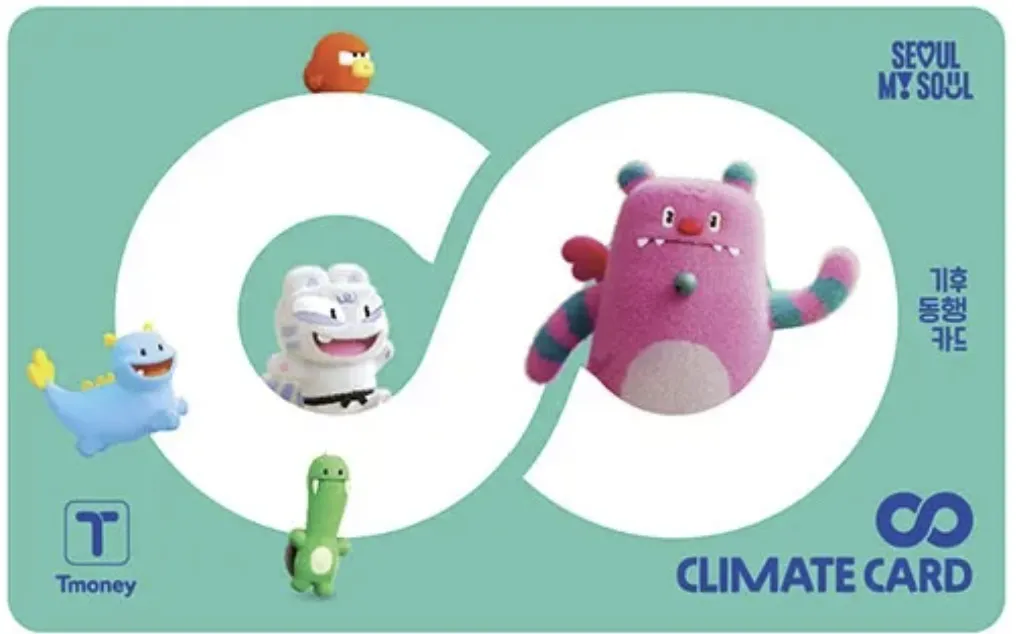
This is the biggest new option for tourists in 2026. The Climate Card (기후동행카드) was originally a monthly pass for Seoul residents, but it now offers short-term passes that visitors can buy.
Pricing:
- 1-day: 5,000 KRW
- 2-day: 8,000 KRW
- 3-day: 10,000 KRW
- 5-day: 15,000 KRW
- 7-day: 20,000 KRW
Physical card fee is an additional 3,000 KRW.
What it covers:
Unlimited rides on Seoul subways, Seoul city buses, and even the public bike system (Ttareungyi). No need to worry about checking your balance before every ride.
The catch:
It only works within Seoul. If you’re taking the subway out to Incheon or Gyeonggi-do (except the Gimpo Airport line), the card won’t cover that portion. It also doesn’t work on taxis.
Where to buy:
Subway station customer service centers or convenience stores. Cash or card accepted at convenience stores.
Who it’s best for: Tourists staying in Seoul for a few days who plan to ride the subway and bus frequently — if you’re taking 4+ rides a day, this saves real money.
Option 3: WOWPASS — The All-in-One for Tourists
WOWPASS has become almost essential for foreign visitors in 2026. It’s a prepaid card that combines currency exchange, store payments, and a built-in T-money transit chip — all on one card.
How it works:
You load foreign currency (USD, JPY, EUR, and others) at bright yellow WOWPASS kiosks in airports, subway stations, and tourist areas. The kiosk converts it to KRW and loads it onto your card. You can then use the card at any shop that accepts Korean card payments.
The one thing to know:
WOWPASS has two separate balances — a shopping balance and a T-money transit balance. When you exchange foreign currency, it goes into the shopping balance only. To ride the subway or bus, you need to load the T-money balance separately with Korean won cash at a convenience store or subway machine. iPhone users can transfer between balances in the WOWPASS app, but Android support is still limited as of mid-2026.
Card cost: 5,000–6,000 KRW. You’ll need your passport to purchase.
Who it’s best for: Tourists who want one card for both shopping and transit, and want to avoid foreign transaction fees.
Option 4: MPASS — Unlimited Rides for Visitors
MPASS is T-money’s own unlimited transportation pass designed specifically for foreign tourists. It covers subways, city buses, and the Airport Railroad in the Seoul metropolitan area.
Pricing:
- 1-day: 15,000 KRW
- 2-day: 23,000 KRW
- 3-day: 30,500 KRW
- 5-day: 47,500 KRW
- 7-day: 64,500 KRW
Cash only. A day counts from first use until midnight. Up to 20 rides per day. After the pass period, you can reload it like a regular T-money card for taxis, convenience stores, and additional transit.
A 3,000 KRW discount applies if you purchase after 5 PM. The card includes a 5,000 KRW deposit, of which 4,500 KRW is refundable when you return the card.
Where to buy: T-money Town near Seoul Station (Exit 10).
Who it’s best for: Tourists who plan to ride transit heavily and want the convenience of not recharging. But compare the prices carefully — the Climate Card tourist pass is significantly cheaper for Seoul-only travel.
Option 5: Single-Use Subway Tickets — Still an Option
If you’re only taking 1 or 2 subway rides during your entire trip, single-use tickets still work fine.
Buy them at ticket machines inside subway stations. Choose your destination, pay the fare plus a 500 KRW deposit. After your ride, use the deposit refund machine near the exit gates to get your 500 KRW back.
Most machines accept cash, and some (like the AREX airport line) accept credit cards. Multi-language support is available, including English.
These only work for subway rides — not buses or taxis.
Quick Comparison
| T-money | Climate Card | WOWPASS | MPASS | Single-Use | |
|---|---|---|---|---|---|
| Best for | All-around use | Seoul-heavy trips | Shopping + transit | Unlimited rides | 1-2 rides only |
| Subway | Yes | Yes (Seoul) | Yes | Yes | Yes |
| Bus | Yes | Yes (Seoul) | Yes | Yes | No |
| Taxi | Yes | No | Yes | Yes (after reload) | No |
| Shopping | Convenience stores | No | Yes (all card shops) | Convenience stores | No |
| Works outside Seoul | Yes | No | Yes | Seoul metro area | Depends on station |
| Cost | 2,500–4,000 KRW + balance | 5,000–20,000 KRW + 3,000 KRW card | 5,000–6,000 KRW + balance | 15,000–64,500 KRW | Fare + 500 KRW deposit |
What Most Locals Actually Use
Here’s something most travel guides won’t tell you: almost no Korean carries a T-money card anymore. We just tap a credit card or a phone at the gate. That’s it. No recharging, no worrying about balance — the fare just goes on the monthly credit card bill.
But that’s only possible because we have Korean bank accounts and credit cards tied to the transit system. For visitors, a physical card is still the way to go.
My Recommendation
For most first-time visitors to Korea in 2026, here’s what I’d suggest:
Short trip, staying in Seoul (1–5 days): Get a Climate Card tourist pass. It’s the best value for unlimited Seoul transit.
Longer trip or visiting multiple cities: Get a T-money card. It works everywhere in Korea and you can bring it back on your next trip.
Want one card for everything (shopping + transit): Get a WOWPASS. Load foreign currency for shopping, then add Korean won separately for the transit balance.
Only taking 1–2 subway rides total: Just buy a single-use ticket. Don’t overthink it.
And whichever card you choose — remember to tap when you get off the bus. Miss that tap and you lose your transfer discount, and you might get charged the maximum fare.
This post was written based on information available as of June 2026. Fares and card availability may change — check official sources before your trip.