Do I Need a Travel Adapter? Korea, Japan & Beyond — Simple Guide
I once almost packed my Dyson Airwrap for a trip to Japan — and nearly ruined it. The Dyson runs on 220V, and Japan uses 100V. It simply won’t work there, and forcing it could damage the motor permanently.
That one close call made me realize how many travelers pack electronics without thinking twice about voltage. Plug shape is the obvious part. Voltage is the part that actually breaks things.
That’s why I built the Travel Plug Converter tool — a simple way to check what you need before you leave.
Why Does Every Country Have a Different Plug?
Back in the early 1900s, each country developed its own electrical system independently. Nobody was thinking about international compatibility — they just wanted to get the lights on. So now we’re stuck with over 15 different outlet types worldwide.
The most common ones travelers run into:
- Type A / B — USA, Canada, Mexico, Japan
- Type C / F — South Korea, most of Europe
- Type G — UK, Ireland, Singapore, Hong Kong
- Type I — Australia, New Zealand
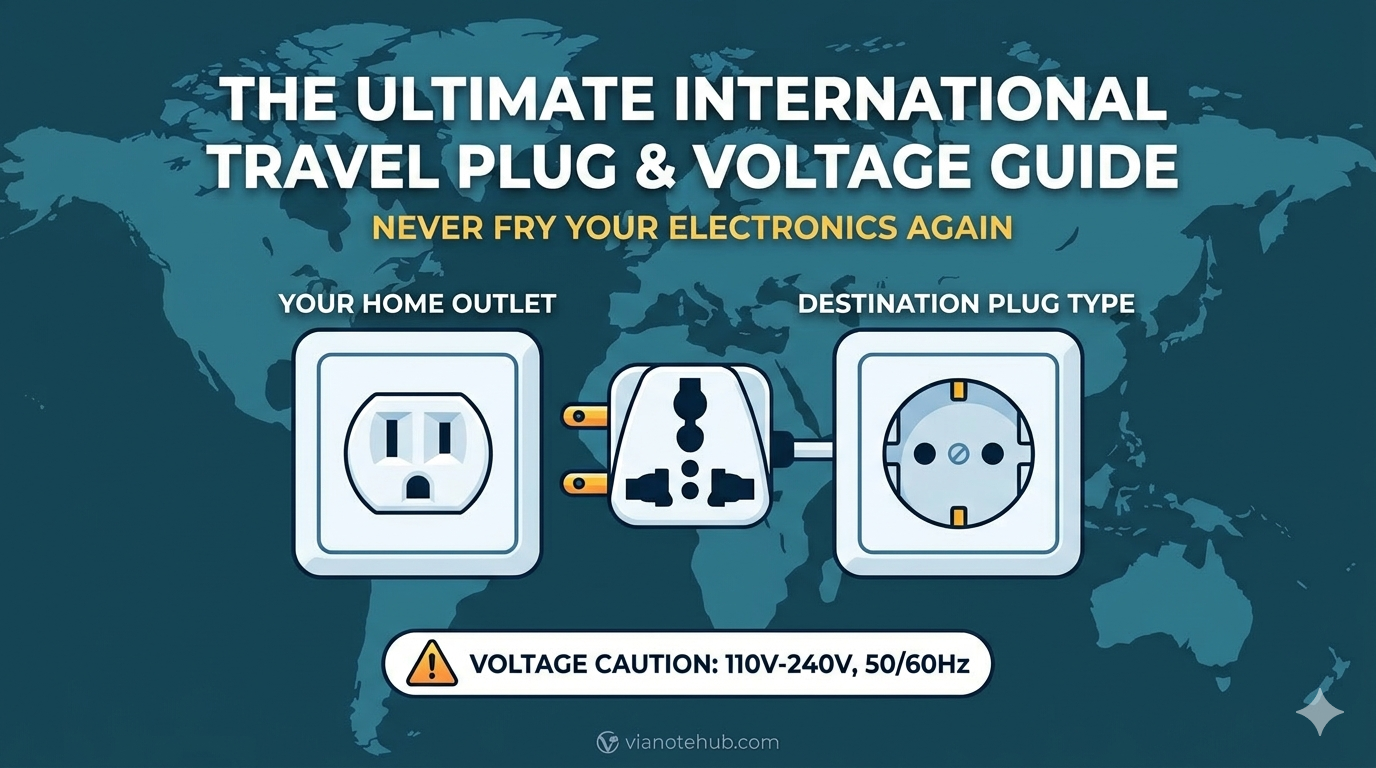
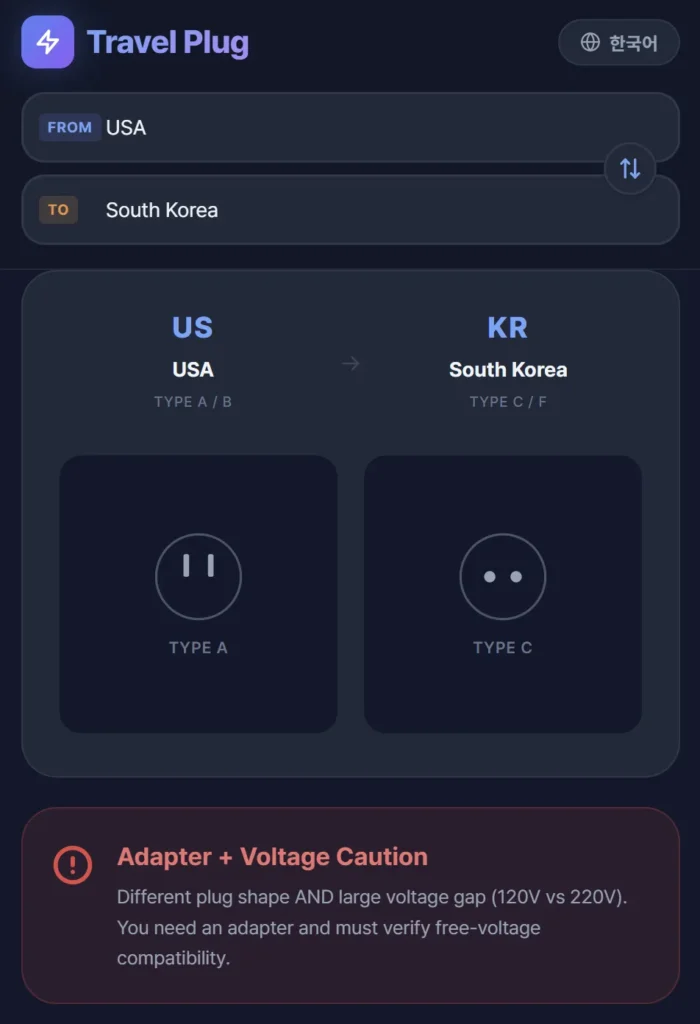
If you’re flying from the US to Seoul, your flat-pin plug simply won’t fit into a Korean round-pin outlet. You need an adapter. Simple as that.
Use the Tool: Stop Googling, Start Packing
Instead of reading through long country lists, I made a simple visual tool.
Go to lab.vianotehub.com/travel_plug
Pick your home country → pick your destination → done.
It shows you exactly which plug types are involved and whether you need to worry about voltage. Two clicks and you have your answer.
The Part Most People Miss: Voltage
Here’s where things get serious. The plug shape is just the beginning.
Voltage (V) is the bigger risk.
Most of the world runs on 220V–240V. North America and Japan use 100V–120V.
What happens if you plug a 220V device into a 100V outlet? It won’t work properly — or at all. The other direction is worse: plug a 110V device into a 220V outlet and it gets double the power it was built for. Best case: the device dies. Worst case: it overheats.
Frequency (Hz) is less of a concern for most travelers.
Most modern chargers handle both 50Hz and 60Hz just fine. The only time it matters is with motorized devices or appliances with internal clocks — things like older hair tools or kitchen gadgets.
Real Example: The Dyson Airwrap Problem
This comes up a lot, so it’s worth being specific.
The Korean version of the Dyson Airwrap is rated 220V 60Hz. Countries like Australia and Spain run on 230V 50Hz — close enough that it works fine with some care. Just limit your usage time and use a dedicated outlet since it draws 1,300W.
But Japan, the US, and Taiwan run on 100V–120V. At that voltage, the Dyson won’t operate correctly — and you risk damaging the motor.
For low-voltage countries, leave the Dyson at home. Pack a dual-voltage (free-voltage) hair tool instead. Look for the label “100–240V” — that means it works everywhere.
One more thing about Japan: wireless (cordless) hair tools are not allowed into Japan — neither in carry-on nor checked baggage. If you’re bringing a curling iron to Japan, make sure it’s wired, not cordless.
How to Check If Your Device Is Safe
Before you pack anything electrical, flip it over and look for the small label on the power brick or the bottom of the device.
Safe to use anywhere:
INPUT: 100–240V ~ 50/60Hz
This means the device works worldwide. Most smartphones (iPhone, Galaxy), laptops (MacBook, most Windows laptops), and Kindle devices fall into this category. You only need a simple plug adapter — no voltage converter needed.
Not safe for international use:
INPUT: 120V 60Hz INPUT: 220V 60Hz
This device is built for one voltage only. Using it in a country with a different voltage could damage or destroy it.
Watch out for: hair straighteners, curling irons, and cheap travel kettles. These are the most common culprits. Always check the label before you pack them.
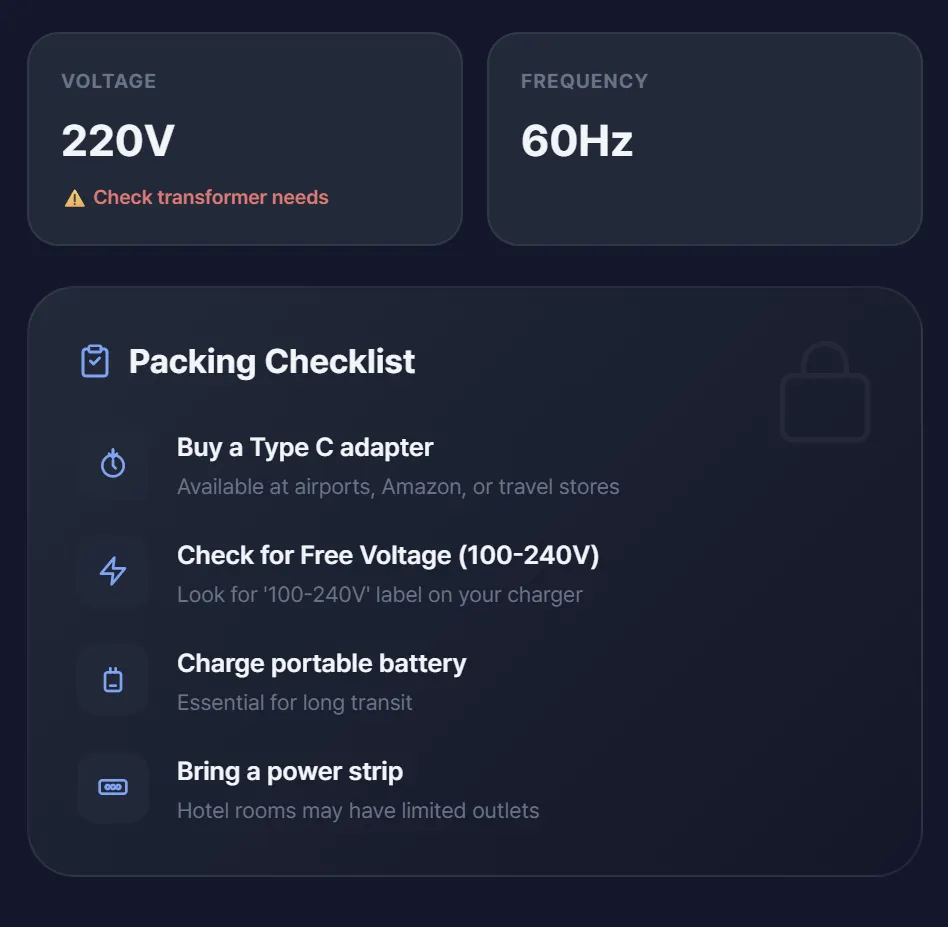
My Packing Checklist (The Short Version)
1. Buy the right adapter before you leave Airport adapters cost two to three times more. Grab one online or at a local electronics store.
2. Do the label check on every device Five minutes now saves you a dead device later.
3. Bring a portable battery A 10,000mAh battery handles a 14-hour flight easily. Don’t rely on finding an airport outlet.
4. Pack a small power strip from home Many hotels — especially older ones in Europe and Asia — have only one or two outlets near the desk. Bring a compact power strip from home and you only need one international adapter to charge everything at once.
Quick Reference: Korea and Japan
| South Korea | Japan | |
|---|---|---|
| Plug Type | C / F | A / B |
| Voltage | 220V | 100V |
| Frequency | 60Hz | 50/60Hz |
Korea note: If you’re coming from the US, you need an adapter (flat pin → round pin) AND your device needs to support 220V. Most modern electronics do — but always check first.
Japan note: Japan uses 100V. Most modern smartphones and laptops are fine, but high-wattage devices like hair dryers and styling tools rated for 220V will not work. Leave them at home or swap for a dual-voltage alternative.
Final Thought
You don’t need to memorize plug types for every country. Just use the tool, check your device labels, and pack one good universal adapter. That’s really all there is to it.
Safe travels — and keep your gadgets alive.
Check the full interactive tool at lab.vianotehub.com/travel_plug