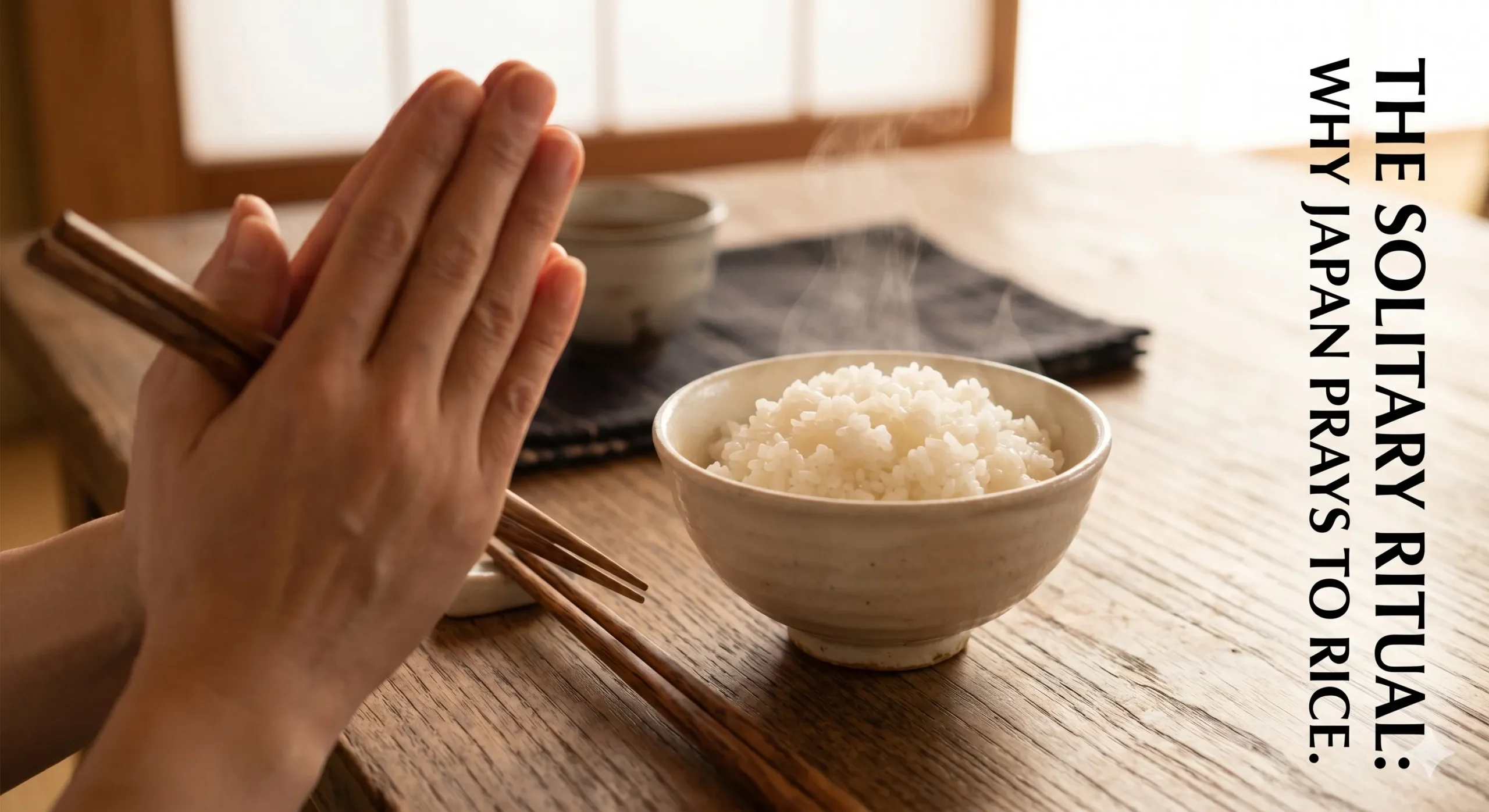
Why Japanese Say Itadakimasu Alone: The Cultural Meaning
The Mystery of the Solitary Diners: A Deep Dive into Japan’s Pre-Meal Ritual
Walking into a quiet convenience store or a solo dining booth in Tokyo, you might witness an intriguing sight: a person sitting entirely alone, bringing their hands together, bowing slightly, and whispering a phrase to an empty room before touching their food. To an outside observer, speaking out loud with no one around might look like a quirky habit or mere self-talk, but this solitary ritual is one of the most profound windows into the cultural framework of Japan.
Quick Guide & Key Takeaways:
- Beyond “Bon Appétit”: The phrase Itadakimasu translates literally to “I humbly receive,” serving as an expression of deep gratitude rather than a simple social cue.
- The Sacred Sacrifice: The ritual honors the physical lives given up by animals and plants to sustain human life, rooted deeply in Shinto and Buddhist philosophies.
- Acknowledging the Labor: It expresses direct appreciation for the invisible network of people involved, including farmers, fishermen, logistics workers, and chefs.
- A Mindful Reset: Saying the phrase acts as a psychological pause button, transitioning the brain into a state of presence, gratitude, and mindful consumption.
The True Etymology of Itadakimasu: The Act of Humbly Receiving
To fully grasp why this ritual persists even in complete isolation, we must unpack the literal linguistic roots of the word. The phrase is the humble form of the Japanese verbs morau (to receive) and taberu (to eat). Historically, the word is derived from the noun itadaki, which refers to the peak of a mountain or the crown of the human head.
In ancient Japanese court and religious traditions, when someone received a gift or an offering from a person of higher social status or a deity, they would lift the object above their heads as a sign of supreme respect. This physical elevation toward the crown of the head eventually evolved into the verb form, solidifying a cultural mindset: eating is not an act of taking, conquering, or consuming; it is an act of receiving a precious gift from a higher source.
The Spiritual Foundation: Shinto Animism and Buddhist Gratitude
The habit of saying this phrase alone stems from deep-seated religious and philosophical traditions that have shaped the Japanese subconscious over centuries, primarily Shintoism and Buddhism. In Shinto belief, the world is alive with Kami (spirits or divine essences) that inhabit all natural elements. Rivers, mountains, trees, rice grains, and animals all possess their own spiritual value. Therefore, harvesting food is not viewed merely as utilizing a resource, but as taking a life that belongs to nature.
This links seamlessly with the Buddhist concept of interconnectedness and the realization that human life cannot exist without the sacrifice of other living things. When a Japanese diner brings their hands together, they are acknowledging a profound spiritual transaction. They are thanking the living energy of the fish, the pork, the vegetables, and even the grains of rice for surrendering their existence to fuel human survival. Because this connection exists directly between the diner and the food, an audience is entirely unnecessary.
The Invisible Network: Honoring the Human Supply Chain
Standard procedure in Japanese cultural education emphasizes that food does not simply appear on a plate. From a very young age, children are taught that the phrase belongs equally to the vast, invisible network of human labor that brought the meal to fruition. The ritual serves as a momentary pause to visualize and thank specific groups of people.
- The Farmers and Producers: Those who spent months under the sun cultivating rice, nurturing vegetables, or raising livestock through grueling physical labor.
- The Harvesters and Fishermen: Individuals who braved volatile weather and rough seas to gather the raw ingredients from nature.
- The Logistics Providers: The truck drivers, market wholesalers, and grocery clerks who managed the complex distribution system to keep food fresh and accessible.
- The Cooks and Chefs: The person who chopped, seasoned, simmered, and plated the food, applying their skills and care—even if that person is the diner themselves.
Comparative Insights: Western Saying Grace vs. Japanese Pre-Meal Rituals
While Western cultures often compare this practice to Saying Grace in Christian traditions, there are fundamental structural differences in how leverage and gratitude are directed. In traditional Western grace, the gratitude is vertical. Thanks are directed upward to a singular, omnipotent Creator who provided the food as a blessing for humankind. Human beings are positioned as the ultimate beneficiaries of a divinely ordered world.
In contrast, the Japanese pre-meal ritual operates on a horizontal and ecological plane. Gratitude is directed outward to the environment and the food elements themselves. Instead of thanking a deity for creating the fish, the diner thanks the fish for its life. This creates a deeply personal, secular, yet highly spiritual relationship with the meal. It turns a basic biological function into an act of mindful, reciprocal respect, explaining why the practice remains completely universal across both religious and secular modern households.
Step-by-Step: How to Perform the Pre-Meal Ritual Correctly
Participating in this beautiful cultural tradition is highly appreciated when dining in Japan. Following a few simple physical gestures will ensure you execute the ritual with authentic respect and social grace.
- Step 1: Align Your Utensils: Before beginning, ensure your chopsticks (Chopsticks/Hashi) are resting horizontally on the small ceramic holder (Hashioki) in front of your bowl, parallel to the edge of the table.
- Step 2: Bring Hands Together: Press your palms flat against each other in front of your chest, similar to a prayer position. The fingers should point upward naturally, and your elbows should remain relaxed near your sides.
- Step 3: Hold the Chopsticks (Optional Local Variation): For an ultra-authentic touch, you can pick up your chopsticks with your right hand, transfer them gently to hold them between the thumbs of your pressed palms, keeping them horizontal while you bow.
- Step 4: Bow and Speak Softly: Lower your head slightly into a gentle bow, close your eyes for a brief moment, and pronounce the phrase clearly but softly: “Itadakimasu.”
- Step 5: Commence Eating: Separate your hands, lift your bowl or chopsticks, and begin your meal. It is customary to sample a small bite of rice or broth first to show appreciation for the fundamental base of the meal.
Troubleshooting & FAQ
Should I say this loudly when eating in a public restaurant alone?
Generally, when dining solo in a public space like a ramen shop or a convenience store counter, you do not need to project your voice. Most locals will whisper the phrase almost audibly to themselves, or simply perform the hand gesture and a silent mental bow. The goal is personal reflection, not social performance.
What is the equivalent phrase used after finishing a meal?
Once you have finished your meal, it is equally important to close the loop of gratitude by saying “Gochisousama deshita.” This translates roughly to “It was a feast” or “Thank you for the hard work involved in preparing this meal.” Bring your hands together once again in the same prayer position as you say it.
Is it considered offensive if a foreigner forgets to say it?
Not at all. Japanese hosts and restaurant staff understand that international travelers come from different cultural backgrounds and do not expect perfect compliance with local customs. However, taking the time to perform this simple ritual shows an immense level of cultural respect and effort, which is always received with warmth and deep appreciation. For the latest opening hours and local guidelines regarding traditional dining establishments, check the official website of your destination prior to arrival.