Why Do Japanese People Say Itadakimasu Before Eating Alone?
Why Do Japanese People Say “I’m Going to Start Eating” Even When Nobody Is Around?
If you visit Japan, you may notice something interesting before a meal begins.
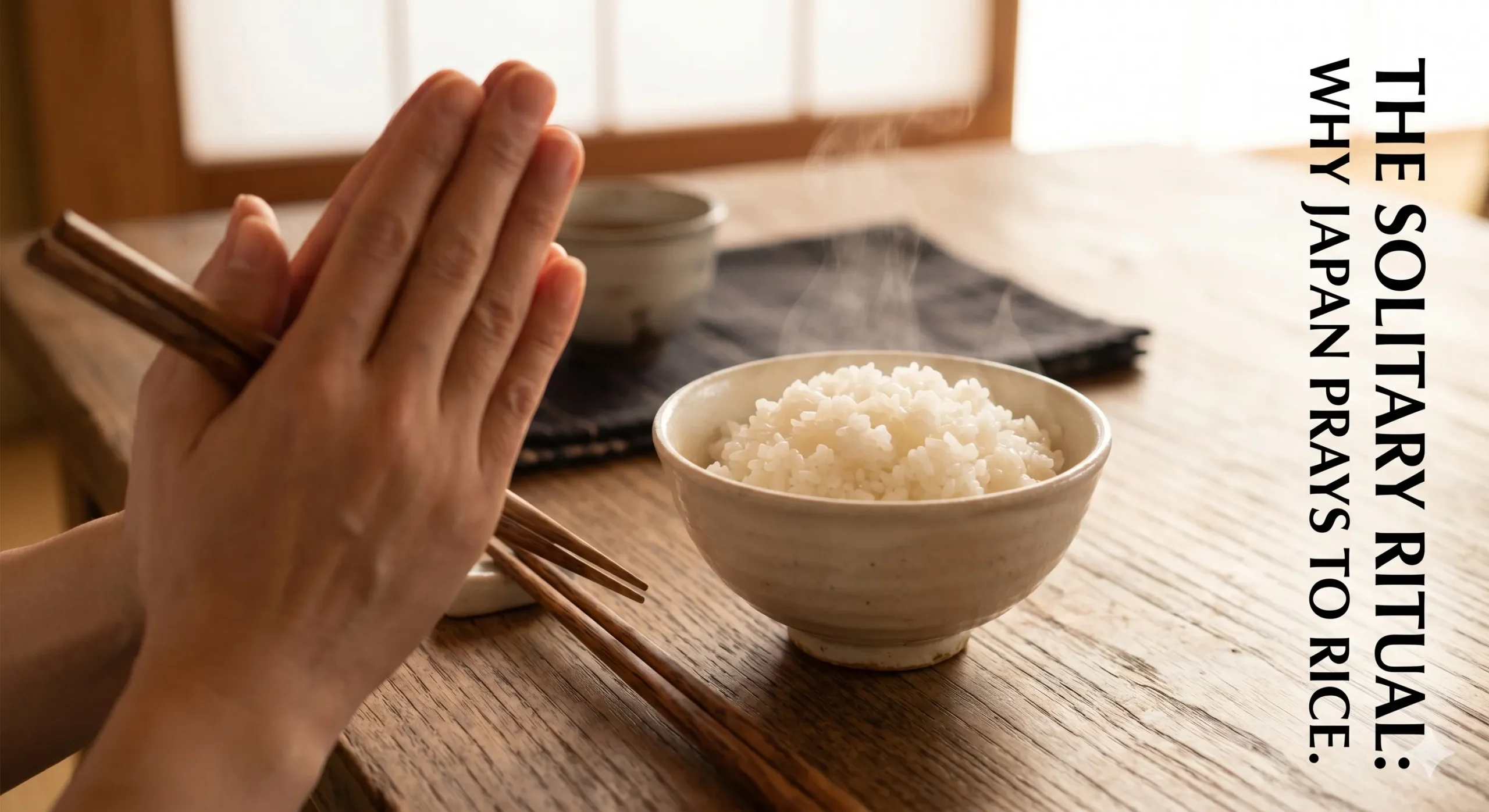
Whether in a busy restaurant, a quiet convenience store dining area, or even on a train, many Japanese people briefly put their hands together and say “Itadakimasu” before eating. What surprises many visitors is that people often do this even when they are completely alone.
At first glance, it may seem like they are talking to themselves. However, the phrase carries a much deeper meaning than simply announcing that it is time to eat.
More Than Just “Let’s Eat”
Many people translate “Itadakimasu” as “Let’s eat” or “I am going to eat now,” but those translations do not fully capture its meaning.
In Japan, the phrase is commonly understood as an expression of gratitude and appreciation for the food in front of you. It is a brief moment to acknowledge everything that made the meal possible before taking the first bite.
Because the meaning is connected to the food itself rather than the people around you, there is no need for an audience. Whether someone is eating with family, friends, coworkers, or completely alone, the phrase still feels appropriate.
Three Layers of Meaning
Although individuals may interpret the phrase differently, many Japanese people associate Itadakimasu with three basic ideas.
1. Gratitude for Nature
Food does not appear magically on a plate. Rice, vegetables, fish, meat, and other ingredients all come from nature.
Saying Itadakimasu can be a way of recognizing the resources, effort, and living things that made the meal possible.
2. Appreciation for the People Who Prepared the Meal
Behind every meal is a long chain of work.
Farmers grow crops, fishermen catch seafood, drivers transport ingredients, store employees stock shelves, and cooks prepare the final dish.
Even when eating a simple convenience store meal, many people view Itadakimasu as a way to appreciate everyone involved.
3. Gratitude for Being Able to Eat
For some people, the phrase is also a reminder not to take food for granted.
It reflects a simple sense of appreciation that there is food available today and that one’s basic needs are being met.
Why Do People Say It When Eating Alone?
This is often the part that surprises foreign visitors.
In many cultures, words of thanks before a meal are mainly social activities shared with other people. In Japan, however, Itadakimasu is often considered a personal expression of gratitude rather than a public performance.
Because of this, the phrase still feels natural when someone is eating alone in a restaurant, at home, or during a work break.
The purpose is not to communicate with other people. Instead, it is a brief moment of appreciation before beginning a meal.
Similar to Saying Grace
Visitors from Western countries sometimes compare Itadakimasu to Saying Grace before a meal.
While the two traditions are not exactly the same, they share a similar idea: taking a moment to express gratitude before eating.
Just as many Christians may say a prayer before a meal regardless of who is present, many Japanese people continue the habit of saying Itadakimasu whether they are dining with others or by themselves.
Do Foreign Visitors Need to Say It?
Not at all.
Nobody expects tourists to follow every local custom perfectly, and most Japanese people will not be offended if a visitor forgets to say it.
However, learning the phrase and understanding its meaning can provide a deeper appreciation of Japanese culture. Some travelers even choose to use it themselves after spending time in Japan because they enjoy the idea of pausing briefly to appreciate their meal.
Final Thoughts
What may initially look like someone talking to themselves is actually a small cultural tradition rooted in gratitude and appreciation.
For many Japanese people, Itadakimasu is not simply a phrase about eating. It is a reminder of nature, the people who prepared the food, and the opportunity to enjoy a meal in the first place.
The next time you hear someone quietly say Itadakimasu before eating alone, you will know that they are not speaking to an empty room. They are expressing thanks for the meal in front of them.